

Why ERP for Pharmaceutical Industry is Key to Modern Success

Boosting Pharma Performance: How ERP Ensures Efficiency and compliance
The pharmaceutical industry is increasingly complex, facing stringent regulatory standards, dynamic market demands, and challenges in production and supply chain management. To stay competitive and compliant, pharmaceutical companies need a robust system to manage operations seamlessly. ERP for Pharmaceutical Industry has emerged as a cornerstone for modern pharma success, enabling companies to integrate processes, optimize resources, and make data-driven decisions.
At ERP Doctor, we help pharmaceutical companies implement tailored ERP solutions efficiently, ensuring they achieve operational excellence while staying compliant.
Why Pharmaceutical ERP Software is Essential
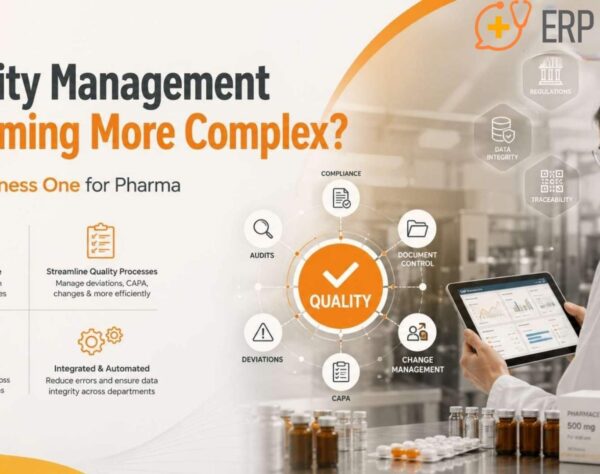
Modern pharmaceutical operations involve manufacturing, inventory management, quality control, finance, and regulatory compliance. Managing all these processes manually or in fragmented systems is inefficient and error-prone. Pharmaceutical ERP Software centralizes these functions, providing a unified platform to streamline operations.
Key benefits include:
- Enhanced Compliance: Automated documentation and reporting help pharmaceutical companies adhere to FDA, EMA, and GMP standards.
- Optimized Production: ERP systems track batches, schedule production, and allocate resources efficiently, reducing errors and delays.
- Supply Chain Efficiency: Real-time inventory and procurement management prevent stockouts and overstocking.
- Data-Driven Decisions: Integrated analytics offer actionable insights to guide strategic planning.
A Pharma ERP Solution is not just about managing operations—it’s about empowering pharmaceutical companies to adapt, innovate, and grow in a competitive market.
Leading ERP Systems for the Pharmaceutical Manufacturing
The best ERP for pharma industry is critical. Here are five top solutions widely adopted in pharmaceutical operations:
1. SAP Business One
Ideal for small to mid-sized pharmaceutical companies, SAP Business One supports inventory management, quality control, production planning, and regulatory compliance, enabling scalable growth.
2. Oracle NetSuite
Oracle NetSuite is a cloud-based Pharma ERP Solution integrating financials, CRM, supply chain, and production. Its real-time capabilities support multi-site pharmaceutical operations efficiently.
3. Microsoft Dynamics 365
Microsoft Dynamics 365 offers flexible deployment, predictive analytics, and workflow automation, helping pharma companies enhance collaboration and maintain compliance.
4. SAP S/4HANA Public Cloud
SAP S/4HANA Public Cloud is a robust ERP system for large-scale pharmaceutical enterprises. It delivers real-time analytics, intelligent automation, and optimized production planning for complex operations.
5. Infor CloudSuite
Infor Cloud Suite provides pharmaceutical companies with batch traceability, quality management, and compliance tracking. Its cloud-based platform ensures scalability and operational excellence.
At ERP Doctor, we implement the best ERP for pharma industry, ensuring each system aligns with operational needs and regulatory standards.
Benefits of ERP for Pharma Manufacturing
Implementing ERP for Pharma Manufacturing delivers significant advantages:
- Streamlined Production: Automated scheduling, batch tracking, and resource management enhance efficiency.
- Quality Assurance: ERP systems monitor deviations, track audits, and ensure consistent product standards.
- Cost Optimization: Reduced manual processes and errors lower operational expenses.
- Improved Collaboration: Centralized data enables smoother communication across departments.
By adopting ERP systems, pharmaceutical companies can focus on innovation and patient outcomes rather than operational bottlenecks.
Empowering Pharmaceutical Companies Through ERP Implementation
Implementing ERP for Pharmaceutical Companies is no longer optional—it is essential for modern pharma success. By leveraging advanced Pharmaceutical ERP Software companies can streamline operations, maintain compliance, enhance product quality, and drive sustainable growth. We ensure smooth ERP adoption, empowering pharmaceutical companies to focus on innovation and patient outcomes while achieving operational excellence.
FAQ: ERP for Pharmaceutical Industry
1. How can ERP systems improve compliance in the Pharmaceutical Industry?
ERP systems for the Pharmaceutical Industry automate documentation, reporting, and audit trails, helping companies maintain FDA, EMA, and GMP compliance while ensuring operational efficiency.
2. Which ERP solutions are best for Pharma Manufacturing?
ERP for Pharma Manufacturing like SAP S/4HANA, Oracle NetSuite, Microsoft Dynamics 365, and Infor CloudSuite provides the Pharmaceutical Industry with tools for production planning, inventory management, and quality control.
3. Why is choosing the best ERP for pharma industry critical for operations?
The right ERP system streamlines workflows, improves data accuracy, ensures regulatory compliance, and helps pharma leaders make informed decisions.
4. How can ERP systems optimize the supply chain?
ERP solutions provide real-time inventory tracking, automated procurement, and demand forecasting, allowing companies to enhance supply chain efficiency and reduce operational delays.
5. How does ERP software support production planning?
Pharma ERP software enables accurate batch scheduling, resource allocation, and real-time monitoring, improving production efficiency and reducing errors in manufacturing.
6. What role does ERP play in quality management for the Pharmaceutical Industry?
ERP systems centralize quality control, track deviations, and ensure consistent product standards, helping the Pharmaceutical Industry maintain compliance with strict regulatory requirements.
7. Are ERP systems scalable for small and mid-sized Pharmaceutical Industry companies?
Yes, ERP systems like SAP Business One and Microsoft Dynamics 365 are scalable solutions that provide small and mid-sized Pharmaceutical Industry companies with comprehensive ERP functionalities.
8. How does a Pharma ERP solution enable data-driven decisions in the pharmaceutical industry?
A Pharma ERP system consolidates operational, financial, and compliance data, giving industry leaders actionable insights to support strategic and informed decision-making.
9. Can ERP systems reduce operational costs for the Pharma Industry?
Yes, ERP systems automate processes, optimize resource allocation, and improve inventory management, helping the Industry reduce operational costs and increase efficiency.
10. How do ERP systems enhance traceability in Pharmaceutical manufacturing?
ERP systems track raw materials, batches, and finished goods throughout production, providing the Pharmaceutical Industry with full traceability for quality assurance and regulatory compliance.