
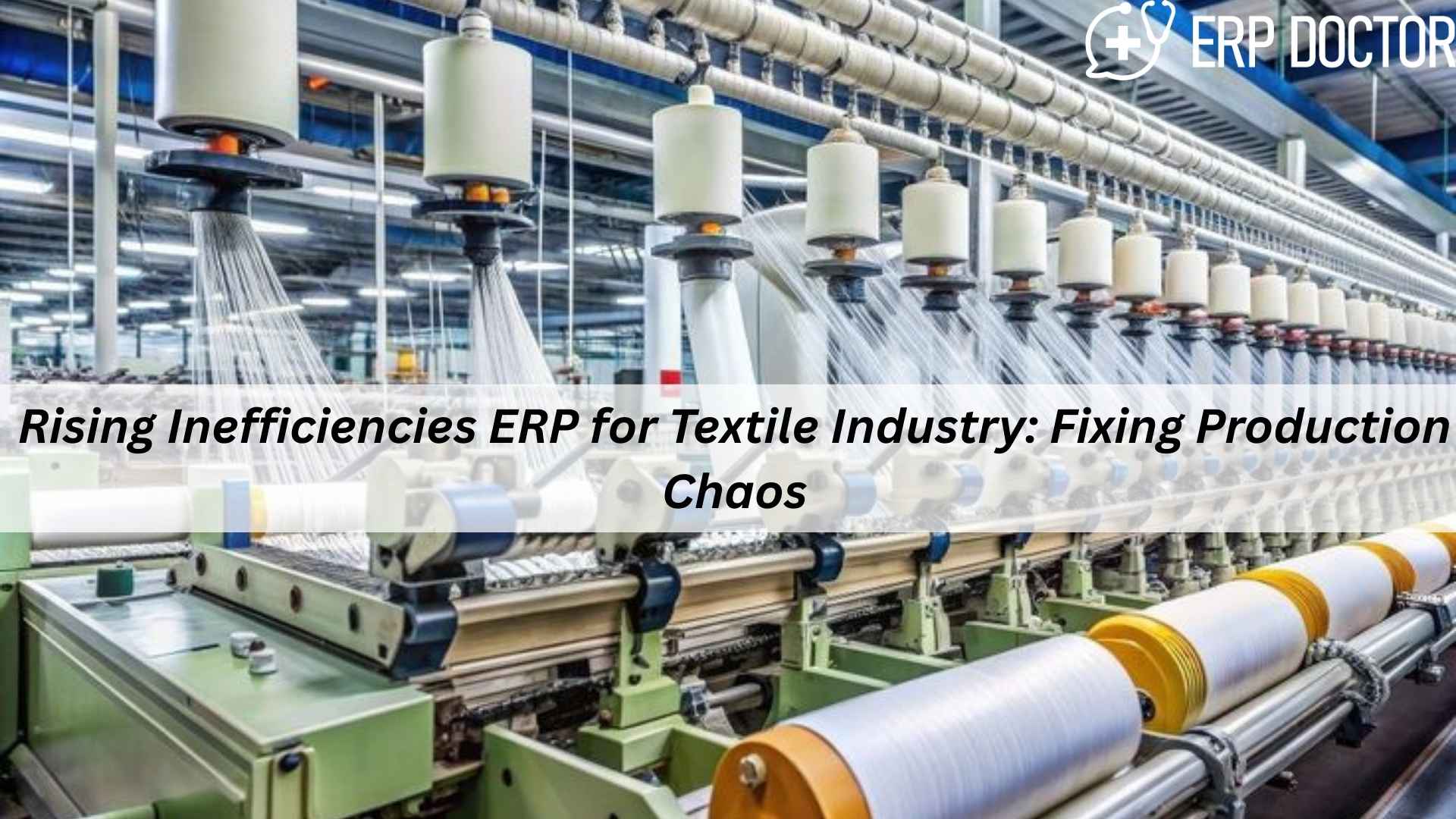
Rising Inefficiencies ERP for Textile Industry: Fixing Production Chaos
ERP for Textile Industry streamlines workflows and reduces costly delays
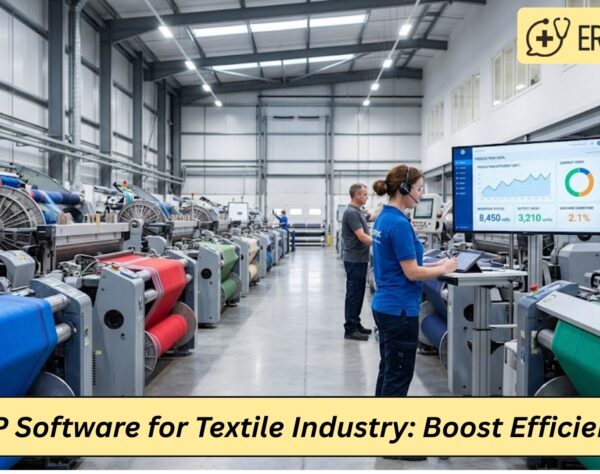
The textile business has evolved into a fast-paced ecosystem where delays, inconsistency, and inefficiency directly impact profitability. Traditional standalone systems make it difficult for ERP Software for Textile business manufacturing and supply businesses to manage production cycles, quality control, and inventory. This is where an advanced ERP software for textile industry brings structured workflows, real-time tracking, and unified data management.
Today’s Textile Manufacturing ERP platforms are far more than digital ledgers—they serve as automated command centers for spinning units, weaving mills, dyeing houses, garment manufacturers, and finishing departments. This digital transformation is essential to preventing production chaos and improving supply chain predictability.
Modern Textile ERP (Enterprise Resource Planning) solutions enable faster decision-making, reduce manual dependency, and ensure accuracy from planning to dispatch. Whether a company is a large textile manufacturer or a success textile supplier, streamlining operations through integrated systems is now a competitive necessity.
Why Integration Matters for Boosting Efficiency in Textile Manufacturing
One of the biggest challenges in ERP textile manufacturing is handling multiple processes—raw material sourcing, spinning, weaving, dyeing, finishing, and packaging. Without a connected platform, communication gaps lead to bottlenecks, resource waste, and missed deadlines.
A robust ERP Software in Textile Manufacturing connects all departments using real-time data, eliminating islands of information. These systems serve as a consolidated hub that manages the entire textile production process, from fiber procurement to finished product delivery.
The shift toward TEXTILE MANUFACTURING SOFTWARE and Textile Product Manufacturing Software ensures:
- Real-time inventory updates
- Automation of purchase and sales workflows
- Dynamic production planning
- Accurate quality checks
- Machine utilization optimization
- Centralized reporting for management
With specialized modules, Textile manufacturing ERP system platforms help companies predict production demand, identify machinery downtime, and maintain a smooth workflow across multiple units.
Strengthening Quality Control and Compliance in Textile Operations
Quality consistency determines profitability and brand reputation. Poor documentation, inefficient checks, and delayed reporting lead to rejections and wastage.
Advanced ERP in textile manufacturing introduces structured QC/QA processes tailored for dyeing, spinning, fabric inspection, garment finishing, and laboratory testing. With Textile ERP Systems for QC/QA, quality teams can:
- Track defects at every stage
- Log inspection reports digitally
- Monitor shade variations
- Maintain compliance documentation
- Prevent rework and returns
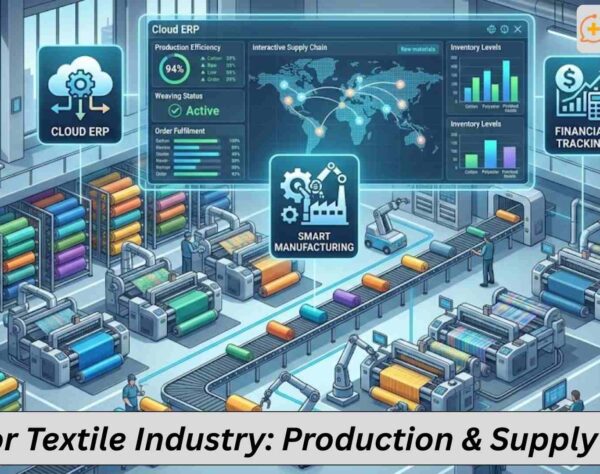
Implementing ERP Implementation for Quality Assurance creates digital transparency that boosts customer trust and reduces wastage significantly. Cloud-enabled solutions like Cloud ERP for Textile Industry further improve accessibility, speeding up decision-making.
Improving Supply Chain Coordination Across Textile & Apparel Processes
The textile and apparel production chain involves multiple interconnected steps. Delays in any stage—from yarn procurement to garment finishing—disrupt the entire supply chain. This is where digital systems play a vital role.
Platforms such as Textile supply chain ERP and ERP system in textile manufacturing businesses automate purchase orders, track material consumption, and ensure timely vendor coordination.
Notably:
- ERP for textile eases supply chain operations by automating procurement cycles
- ERP for textile leads to improved vendor transparency
- ERP software to manage textile production streamlines workflow sequencing
Whether implemented in spinning mills or apparel factories, an Industry-Specific ERP System for Textile & Apparel Manufacturing reduces operational waste and ensures faster delivery.
Customization and Scalability: The Future of ERP Solutions for the Textile Sector
Every textile enterprise has unique needs depending on its products, machinery, and workflow structure. That’s why many companies prefer CUSTOM TEXTILE ERP SOFTWARE or Customizable ERP Software for Textile Manufacturing to map their exact processes.
The flexibility to modify modules ensures a perfect fit for:
- Multi-plant operations
- Fabric inspection systems
- Yarn stock management
- Dyeing and chemical usage logs
- Production sequencing
- Job work tracking
- Order-wise costing
As the industry shifts toward digital-first manufacturing, cloud-based ERP for textile companies is becoming the preferred choice due to reduced IT costs, high security, and scalability.
Choosing the Best ERP Software for Textile & Spinning Industry
Selecting a solution that aligns with business goals is essential. Companies often evaluate:
- Production planning efficiency
- Data analytics capabilities
- Integration with textile machinery
- User-friendly dashboards
- Real-time tracking features
- Mobile accessibility
- Local compliance support
With so many options available, businesses must focus on the best ERP software for the textile industry, especially systems designed for modern textile manufacturing. The right platform becomes the backbone of seamless operations and scalable growth.
Solutions like ERP Software for Textile Manufacturing Industry, Textile ERP for manufacturing businesses, and ERP Solution for Textile Industry help companies achieve superior visibility, fast throughput, and accurate reporting.
When businesses properly implement ERP software for Textile manufacturing, they significantly improve efficiency while reducing production chaos.
FAQs About ERP for Textile Industry
1. Why does the Textile Industry need a modern ERP system?
The Textile Industry manages multiple complex processes, and an ERP system keeps them unified under one digital framework. It reduces manual errors, increases process visibility, and ensures production teams stay synchronized. This helps avoid delays and improves overall operational efficiency.
2. How does an ERP help the Textile Industry improve supply chain performance?
ERP automates material planning, vendor coordination, and order processing across the Textile Industry. It offers real-time stock insights and updates, preventing shortages or delays. With better visibility, manufacturers can respond quickly to supply chain disruptions.
3. Can ERP software enhance quality control in the Textile sector?
Yes, ERP in Textile Quality Control improves QC/QA by digitizing inspections and tracking every defect within the production cycle. It ensures fabric quality, shade accuracy, and compliance documentation are always consistent. This reduces rework and strengthens customer satisfaction.
4. Is cloud-based ERP beneficial for the Textile?
Cloud ERP gives textile manufacturers on-demand access to production data, even across multiple units. It lowers IT costs and provides automatic updates while maintaining strong data security. This makes it ideal for companies looking for flexibility and scalability.
5. How does an ERP support costing and budgeting in the Textile Industry?
ERP systems track actual material usage, labor hours, and overheads across textile operations. This ensures accurate cost calculations for each order and helps businesses forecast budgets more precisely. With better cost control, profitability improves significantly.
6. Do spinning mills in the Textile benefit from specialized ERP?
Yes, spinning mills gain precise tracking of yarn counts, production speeds, and machine performance through ERP integration. The system helps reduce waste and increases efficiency by analyzing real-time data. This leads to consistent quality and higher productivity.
7. Can ERP integrate with machinery used in the Textile Industry?
Modern ERP systems can connect with weaving, knitting, dyeing, and finishing machines to capture performance data automatically. This helps detect inefficiencies and plan maintenance more accurately. It reduces downtime and supports smoother production flow.
8. Does ERP help with order tracking in the Textile Industry?
ERP provides real-time order status updates from production to dispatch, eliminating communication gaps. Teams can monitor progress, allocate resources, and meet delivery deadlines more effectively. This improves customer trust and reduces order-related errors.
9. Is custom ERP recommended for large Textile Industry manufacturers?
Custom ERP solutions fit the unique workflows of large textile units, from multi-plant coordination to specialized fabric processes. They ensure complete alignment with existing operations without forcing workflow adjustments. This leads to better usability and stronger long-term efficiency.
10. How long does ERP implementation take in the Textile Industry?
Implementation time varies depending on the company’s size, customization needs, and modules selected. Smaller units may complete deployment quickly, while larger operations require more structured rollout phases. Proper testing and training ensure a smooth transition to the new ERP system.