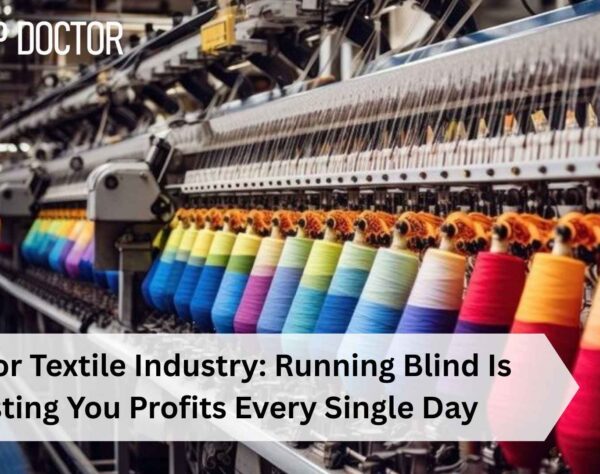

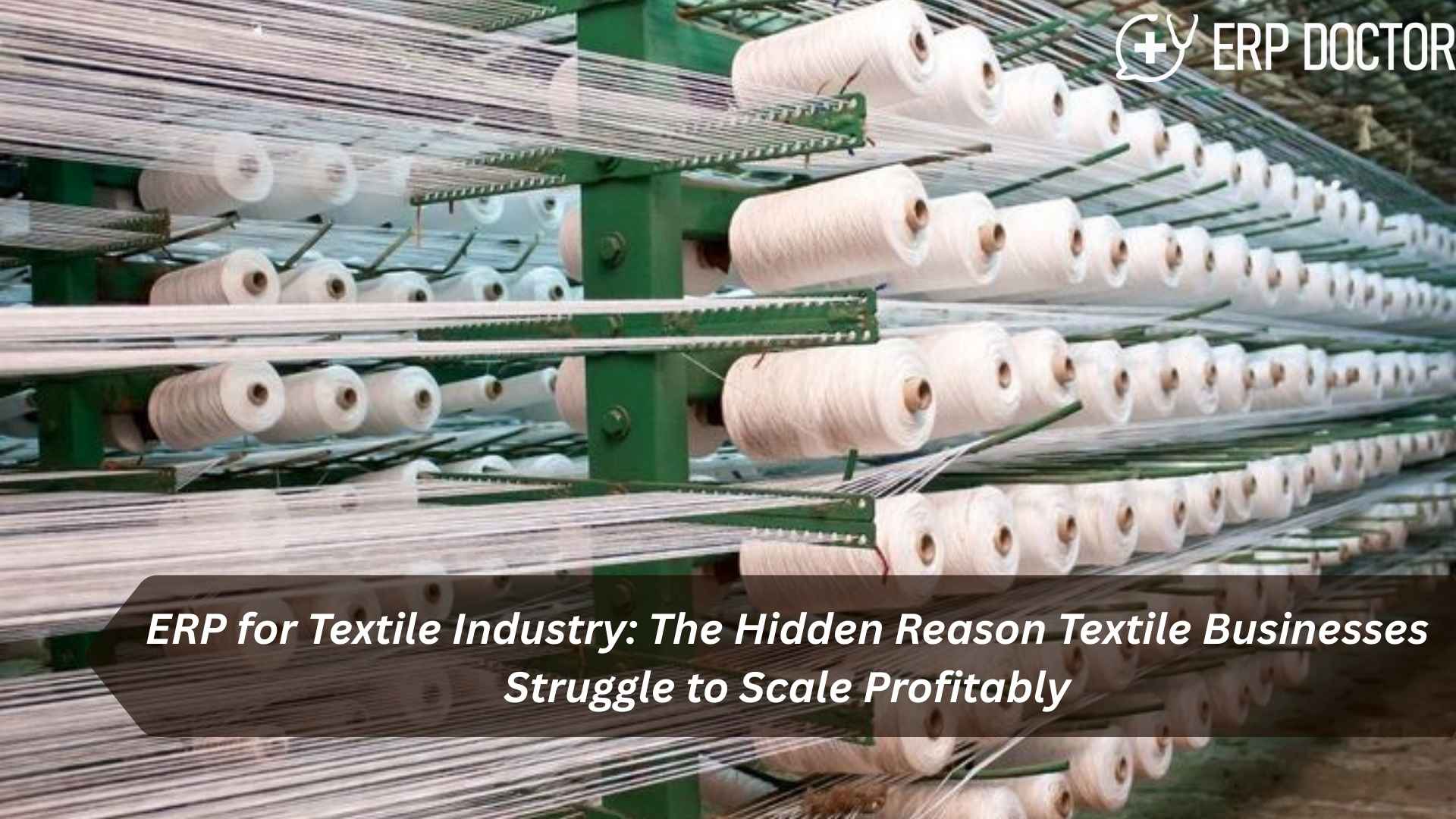
ERP for Textile Industry: The Hidden Reason Textile Businesses Struggle to Scale Profitably
Why CEOs Need ERP for Textile Industry to Gain End-to-End Control Across Textile Operations
The textile sector is one of the most complex manufacturing environments in the world. From fluctuating raw material costs to multi-stage production, quality compliance, and fast-changing customer demands, textile leaders often struggle to scale profitably. The hidden challenge isn’t effort or expertise—it’s fragmented systems. This is where ERP software for textile industry adoption becomes a true growth enabler. Modern textile ERP platforms bring structure, visibility, and control to operations that otherwise remain siloed. Whether you are a mill owner, garment manufacturer, or fabric exporter, the right ERP solution for textile industry can transform daily chaos into predictable performance.
Why Modern Textile Operations Struggle Without Integrated Systems
Traditional textile businesses rely on disconnected tools for production, inventory, finance, and sales. This lack of integration causes delays, excess stock, quality failures, and missed delivery commitments. A modern erp for textile industry approach replaces guesswork with data-driven decisions.
With an integrated textile ERP systems architecture, organizations gain centralized control over procurement, dyeing, weaving, finishing, and dispatch. This is especially important for ERP For Textile Product Manufacturers handling multiple product lines and order variations.
Achieving End-to-End Production Visibility Across Textile Manufacturing
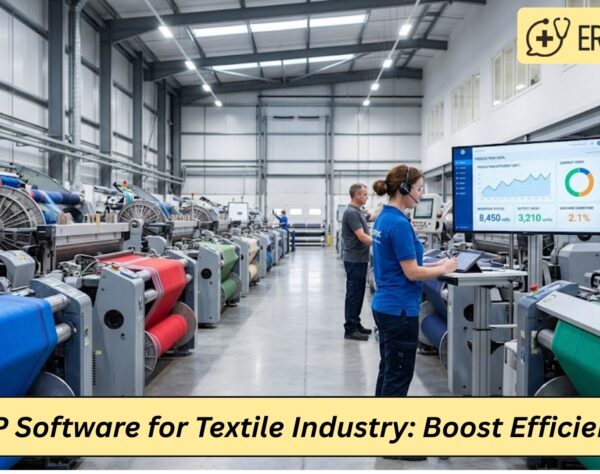
One of the biggest advantages of Textile Manufacturing ERP software is real-time visibility. Using ERP for real-time textile production tracking, managers can monitor every batch, loom, and process stage.
Advanced textile production planning ERP tools synchronize demand forecasts with capacity planning. This creates a true end-to-end ERP for textile production, ensuring resources are optimized and bottlenecks are addressed before they impact delivery timelines.
Strengthening Inventory and Supply Chain Control in Textile Businesses
Inventory mismanagement is a silent profit killer. Excess yarn stock, aging fabrics, and raw material shortages directly affect cash flow. A robust inventory management ERP for textiles integrates with procurement and sales to maintain optimal stock levels.
When combined with textile supply chain ERP, businesses gain supplier visibility, traceability, and faster replenishment cycles. This unified approach helps textile companies respond quickly to market changes without overstocking.
Building Consistent Quality Assurance Across Textile Processes
Quality consistency is non-negotiable in global textile markets. Modern ERP in Textile Quality Control systems embed quality checkpoints directly into production workflows.
With Textile ERP Systems for QC/QA, inspection data, defect tracking, and corrective actions are recorded in real time. Structured ERP Implementation for Quality Assurance ensures compliance with buyer standards while reducing rework and wastage.
Designing Scalable and Flexible Systems for Growing Textile Enterprises
As businesses grow, their systems must grow too. Custom ERP for textile industry solutions allow organizations to configure workflows based on specific processes such as spinning, knitting, or garmenting.
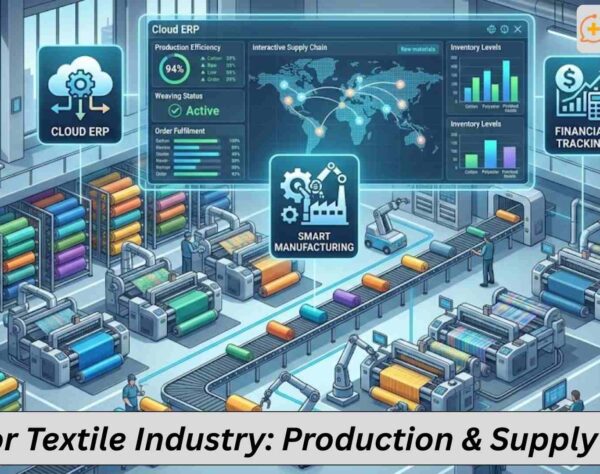
For enterprises operating at scale, ERP for large textile enterprises provides advanced analytics, multi-location management, and consolidation reporting. Many companies now prefer Cloud ERP for textile industry options for scalability, security, and remote access.
Accelerating Digital Transformation in Textile Manufacturing
The shift toward smart manufacturing is accelerating. Digital transformation in textile ERP integrates IoT data, automation, and analytics into a single platform.
With Cloud Based ERP software for Textile Industry, decision-makers gain anytime access to KPIs, production efficiency, and financial performance. Choosing the best ERP for textile industry is no longer about automation alone—it’s about future readiness.
Customer and Sales Alignment Using ERP for Textile Industry
Textile businesses often struggle to align sales promises with production realities. Integrated Textile CRM and ERP capabilities bridge this gap.
By connecting customer orders with manufacturing capacity, ERP software for textile manufacturing companies improves delivery accuracy and customer satisfaction. This alignment is a core advantage of the best ERP solution for textile industry implementations.
Successful ERP for Textile Industry Implementation Strategy
Technology alone doesn’t guarantee success. A structured Textile ERP implementation approach is essential. This includes process mapping, user training, and phased deployment.
Choosing custom textile manufacturing ERP software with industry-specific ERP software features for Textile Industry ensures faster adoption. Well-designed ERP Modules covering finance, production, quality, and logistics deliver measurable ROI within months.
Future-Proofing Growth with ERP for Textile Industry
In a competitive global market, profitability depends on agility and control. A modern ERP textile platform empowers leadership with insights needed to scale sustainably.
From Manufacturing ERP Software For Textile Industry to advanced analytics and compliance management, ERP is no longer optional—it’s the foundation for long-term success.
FAQs About ERP for textile industry
1. How does an ERP system improve production efficiency in the Textile Industry?
An ERP platform designed for textile manufacturing connects production planning, machine scheduling, and labor management into one unified system. This allows Textile Industry businesses to reduce idle time, balance workloads, and respond faster to order changes while maintaining consistent output across departments.
2. What role does ERP software play in quality management within the Textile sector?
ERP solutions for textile manufacturers embed quality checks at every production stage, from raw material inspection to finished goods. This helps Textile Industry companies track defects, ensure compliance with buyer standards, and maintain reliable quality without manual paperwork or delays.
3. Is cloud-based ERP a good choice for companies in the Textile sector?
Cloud-enabled ERP platforms offer flexibility, real-time access, and easier scalability for Textile sector organizations. They allow managers to monitor operations remotely, reduce IT infrastructure costs, and quickly adapt the system as production volumes or locations grow.
4. Can ERP solutions handle multi-location operations in the Textile Industry?
Yes, modern ERP applications are built to manage multiple factories, warehouses, and sales offices under one system. This gives Textile Industry enterprises centralized visibility while still allowing location-specific control over production and inventory.
5. How does ERP help improve inventory control for Textile Industry manufacturers?
An ERP system tracks raw materials, work-in-progress, and finished goods in real time across the textile value chain. This enables Textile Industry businesses to prevent overstocking, avoid material shortages, and improve cash flow through smarter inventory planning.
6. What ERP features are most valuable for decision-makers in the Textile sector?
Key ERP capabilities include production planning, supply chain coordination, quality monitoring, and financial reporting. Together, these features give Textile Industry leaders accurate insights to make faster, data-driven decisions that support profitability and growth.
7. How long does it usually take to implement an ERP solution in the Textile business?
ERP deployment timelines depend on business size, process complexity, and customization needs. For most Textile business organizations, a phased ERP rollout helps ensure smoother adoption while minimizing disruption to daily operations.
8. Can ERP software be customized for Textile Industry-specific manufacturing processes?
Yes, ERP platforms can be tailored to match textile-specific workflows such as spinning, weaving, dyeing, and garment production. This customization ensures the ERP system aligns closely with the real operational needs of Textile Industry manufacturers.
9. How does ERP support better decision-making in the Textile manufacturing sector?
ERP systems consolidate data from production, sales, inventory, and finance into a single dashboard. This unified view allows Textile Industry executives to identify trends, spot inefficiencies, and take corrective actions based on real-time insights rather than assumptions.
10. Is ERP suitable for both small and large businesses in the Textile sector?
ERP solutions are scalable and can support small textile firms as well as large manufacturing groups. As Textile sector companies grow, the ERP system can expand in functionality and users without requiring a complete system change.