
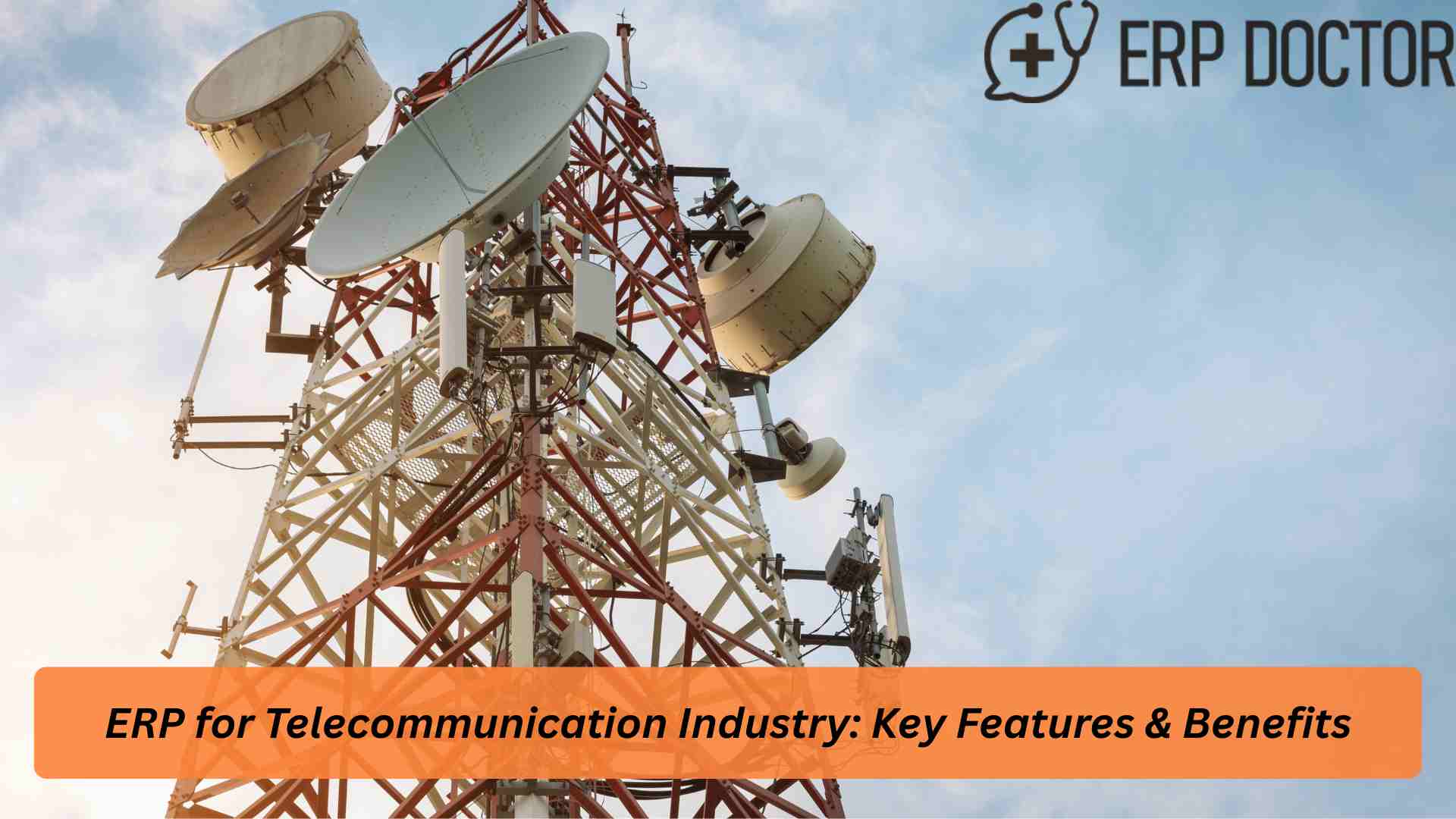
ERP for Telecommunication Industry: Key Features & Benefits
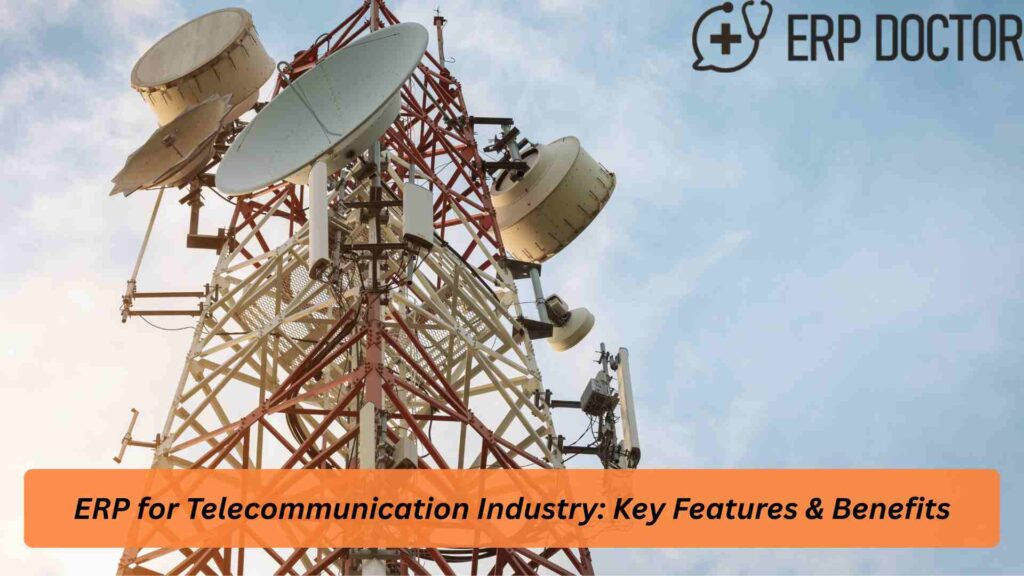
Top ERP Features Telecom Companies Need for Faster Growth Using ERP
The ERP for telecommunication industry is revolutionizing how telecom companies manage complex operations, from billing and network management to customer service and financial compliance. By integrating all these functions into a single platform, telecom businesses can streamline workflows, reduce operational costs, and accelerate growth. Implementing a robust ERP for telecommunication industry solution ensures real-time visibility, better decision-making, and scalable operations for the future.
Key Challenges in the Telecommunications Sector
Telecom companies operate in a highly regulated and asset-heavy environment.
- Fragmented data across departments
- Complex billing and revenue assurance
- High infrastructure and maintenance costs
- Customer churn and service-level expectations
- Rapid technology upgrades and scalability needs
Addressing these challenges requires robust ERP solutions for telecommunications that integrate finance, operations, and customer management seamlessly.
Key Features of ERP for the Telecom Industry
Centralized Telecom Industry Operations Management
A modern ERP system centralizes all operational data into a single platform.
- Network asset tracking
- Vendor and contract management
- Unified finance and operations visibility
This improves decision-making speed and reduces operational silos across telecom companies.
Advanced Billing and Revenue Management
Billing complexity is one of the biggest pain points in the telecom industry.
- Automated invoicing
- Usage-based and subscription billing
- Revenue recognition compliance
Reliable telecommunications software ensures accuracy, minimizes revenue leakage, and improves cash flow.
Customer Lifecycle and Service Management
Telecom businesses must manage millions of customer interactions daily.
- Customer onboarding automation
- Service request and complaint tracking
- SLA monitoring
Integrated telecom software enhances customer satisfaction while reducing service resolution time.
Inventory and Network Asset Control
Telecom infrastructure involves massive investments in equipment and assets.
- Real-time inventory tracking
- Network equipment lifecycle management
- Maintenance scheduling
ERP software ensures optimal asset utilization and reduces downtime.
Scalable Financial Management and Compliance
Telecom companies operate across regions with varying tax and compliance rules.
- Multi-currency accounting
- Automated tax calculations
- Regulatory reporting
An enterprise-grade ERP solution keeps finances transparent and audit-ready.
Project and Deployment Management
Telecom expansion projects demand precise coordination.
- Tower rollout planning
- Resource allocation
- Cost tracking
ERP implementation supports on-time project delivery and budget control.
Data Analytics and Performance Insights
Real-time analytics is critical for telecom growth.
- Revenue trend analysis
- Churn prediction
- Operational KPIs
Built-in dashboards help leadership take data-driven decisions faster.
Essential Benefits of ERP for Telecom Industry Success
- Improved operational efficiency
- Reduced operating costs
- Faster service delivery
- Enhanced customer retention
- Better scalability for future technologies
These benefits make ERP solutions a strategic necessity, not just a backend tool.
Implementing ERP in the Telecommunications Industry
ERP Implementation Strategy for Telecom Companies
Successful ERP implementation requires expert planning.
- Requirement analysis
- Industry-specific customization
- Data migration and testing
- User training
Working with experienced ERP experts ensures smoother deployment and faster ROI.
Choosing the Right ERP Providers
Not all ERP providers understand telecom complexity.
- Industry-specific experience
- Strong ERP support services
- Scalable cloud or hybrid options
The right ERP provider becomes a long-term technology partner.
Telecommunications Solutions from ERP and Our Partners
Modern telecommunications solutions from ERP and our partners integrate CRM, billing, analytics, and operations into a unified platform. These solutions empower telecom companies to innovate faster, reduce costs, and deliver superior customer experiences.
Conclusion: Why ERP Software Is Essential for the Telecom Industry
ERP software has become the backbone of modern telecom companies looking for faster growth, better operational control, and long-term competitiveness. With telecom-specific features such as billing management, network operations support, customer data integration, and real-time reporting, ERP systems help streamline daily operations and reduce costs. By choosing the right ERP solution tailored to the telecom industry, businesses can improve efficiency, enhance customer satisfaction, and confidently prepare for future expansion.
ERP Doctor is a trusted ERP consulting partner for telecom companies looking to improve efficiency and scale faster. With deep industry knowledge and proven ERP solutions, ERP Doctor helps telecom businesses streamline operations, manage billing and customer data, and gain real-time visibility across departments. From ERP selection to implementation and support, ERP Doctor delivers customized solutions that drive growth, reduce costs, and keep telecom companies future-ready.
FAQs for ERP Solutions in the Telecom Industry
1.What is ERP for the telecommunication industry and how is it different from generic ERP?
ERP for the telecommunication industry is a specialized system designed to handle high-volume transactions, complex billing models, network asset management, and regulatory compliance. Unlike generic ERP software, telecom ERP integrates telecom-specific workflows such as subscriber management, usage-based billing, and infrastructure lifecycle tracking.
2.Why do telecom companies need ERP software instead of multiple standalone systems?
Telecom companies manage billing, customer data, network assets, finance, and compliance at scale. Using multiple disconnected systems creates data silos and inefficiencies. ERP software unifies all telecom industry operations into one platform, reducing errors, lowering operational costs, and improving decision-making speed.
3.How does ERP improve telecom industry operations in real time?
ERP improves telecom industry operations by providing real-time visibility into billing, network performance, inventory, and financial data. Automated workflows reduce manual intervention, while dashboards enable faster responses to outages, revenue leakage, and customer service issues.
4.Is ERP implementation costly for telecom companies in the long run?
While ERP implementation requires upfront investment, telecom companies benefit from long-term cost savings through automation, reduced revenue leakage, optimized asset usage, and improved customer retention. Cloud-based ERP solutions also allow telecom companies to scale costs gradually.
5.Can ERP handle complex telecom billing and multiple revenue models?
Yes, ERP systems are designed to manage telecom billing complexity, including prepaid, postpaid, subscription-based, and usage-based billing. ERP also supports revenue assurance, ensuring accurate invoicing and compliance with telecom regulations.
6.How long does ERP implementation take for telecom companies?
ERP implementation in the telecommunications industry typically takes between 3 and 9 months. The timeline depends on factors such as company size, number of users, customization needs, data migration complexity, and integration with existing telecom software.
7.What ERP features are most critical for telecom companies?
Critical ERP features for telecom companies include billing and revenue management, network asset tracking, customer service management, financial compliance, analytics, and scalable cloud infrastructure to support business growth.
8.Do ERP systems support telecom regulatory and compliance requirements?
Yes, ERP software supports telecom regulatory compliance by automating tax calculations, financial reporting, audit trails, and region-specific compliance requirements. This reduces regulatory risk and simplifies audits.
9.Can small and mid-sized telecom companies use ERP solutions effectively?
Absolutely. Cloud-based ERP solutions are cost-effective, scalable, and ideal for small and mid-sized telecom companies. These systems allow businesses to start with core modules and expand functionality as operations grow.
10.How do ERP experts add value to telecom ERP implementation?
ERP experts bring telecom industry knowledge, ensuring the ERP system is configured to match real operational workflows. They handle customization, integration, user training, and ongoing ERP support, helping telecom companies achieve faster ROI and smoother adoption.