
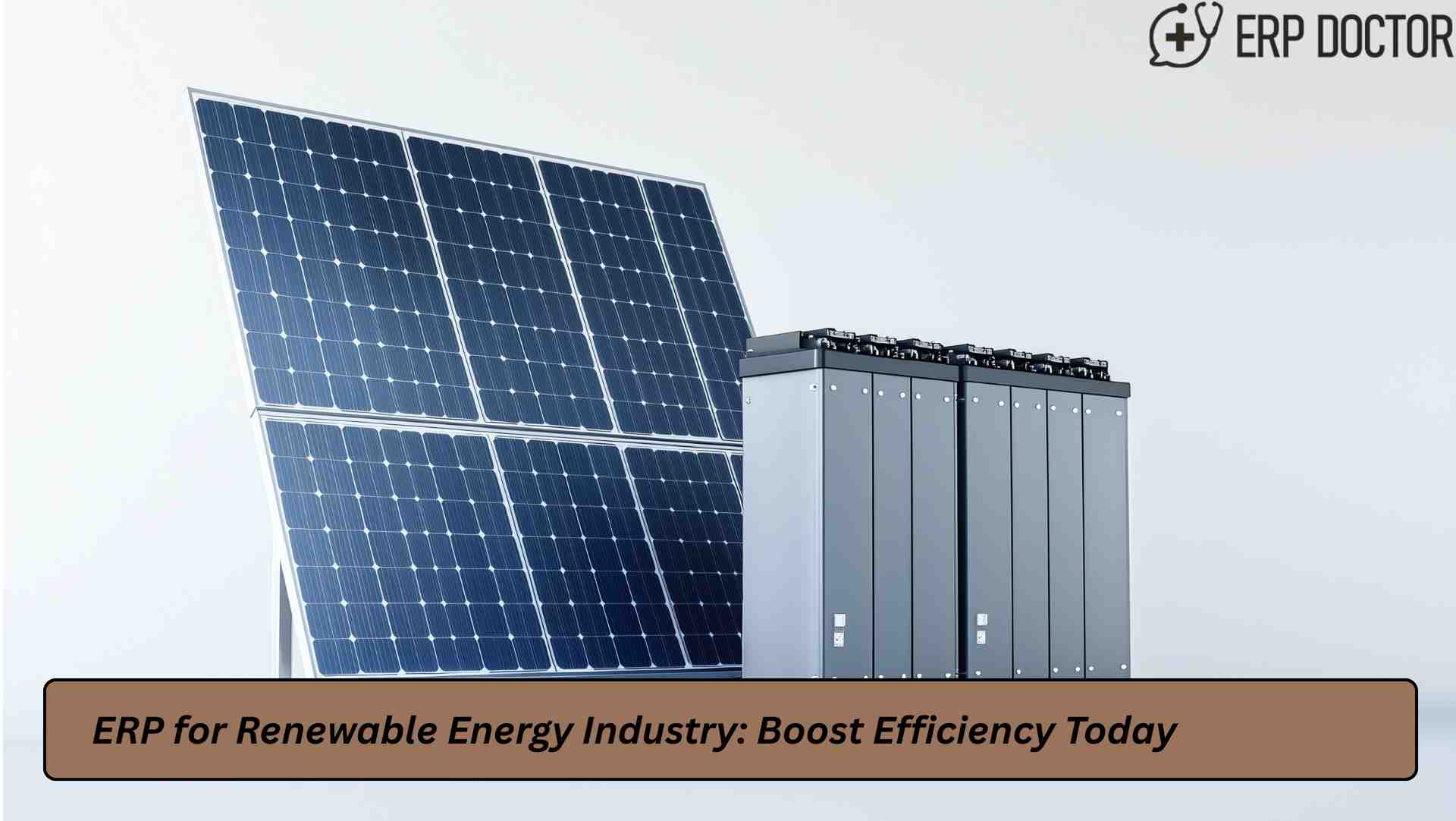
ERP for Renewable Energy Industry: Boost Efficiency Today
ERP for Renewable Energy Industry: Optimizing Project and Asset Management with Smart ERP Systems
The renewable energy industry is growing at a rapid pace, with projects ranging from solar farms to wind turbines becoming increasingly complex. Managing assets, projects, and financials efficiently requires a smart ERP system designed for the unique needs of energy companies. Implementing ERP for Renewable Energy Industry helps streamline operations, enhance collaboration, and ensure real-time visibility across all processes. This guide explores how ERP software transforms project and asset management for renewable energy companies.
Project Planning and Scheduling
Efficient project execution is critical in renewable energy projects. ERP integration services allow energy companies to plan, schedule, and monitor projects seamlessly.
- Resource allocation: Assign labor, equipment, and materials accurately using ERP for mid-sized companies or large enterprises.
- Timeline tracking: Real-time ERP software monitors project milestones, reducing delays and cost overruns.
- Collaboration: Integrated ERP platforms enable cross-department communication and updates.
Practical takeaway: With custom ERP solutions, renewable energy firms can optimize project schedules while minimizing risks.
Asset Management and Maintenance
Assets like turbines, solar panels, and batteries require continuous monitoring. ERP systems provide:
- Real-time asset tracking with sensors integrated into the ERP platform.
- Maintenance alerts based on usage data and predictive analytics.
- Cost optimization by analyzing performance trends and reducing downtime.
Implementing an all-in-one ERP solution ensures renewable energy assets operate efficiently, increasing overall ROI.
Financial Management and Compliance
Financial oversight in renewable energy projects is complex, involving multiple stakeholders, funding sources, and government incentives. ERP software helps by:
- Automating accounting and invoicing across projects.
- Ensuring regulatory compliance with environmental standards.
- Budgeting and forecasting for large-scale projects using integrated ERP platforms.
Benefit: With ERP consulting services, companies can tailor their ERP customization to meet financial reporting requirements.
Supply Chain and Inventory Management
Managing the supply chain for renewable energy requires precision and visibility. ERP integration provides:
- Inventory tracking for components like solar panels and wind turbines.
- Vendor management to streamline procurement processes.
- Just-in-time inventory to reduce storage costs and avoid project delays.
Tip: Cloud ERP solutions allow access to supply chain data from any location, supporting remote project teams.
ERP for Small Businesses and Mid-Sized Companies
Not all renewable energy companies are large enterprises. ERP for small businesses offers:
- Scalable solutions that grow with the business.
- Cost-effective ERP software with essential modules for project and asset management.
- Integration with existing systems without disrupting operations.
Takeaway: Even mid-sized renewable energy firms benefit from ERP integration services that optimize workflow and reduce overhead.
Custom ERP Solutions for Renewable Energy
Every energy company has unique requirements. Custom ERP solutions provide:
- Tailored dashboards to monitor KPIs critical to renewable projects.
- Specialized modules for solar, wind, or bioenergy operations.
- Integration with IoT and smart monitoring devices.
Result: Companies achieve a smart ERP system that provides actionable insights and enhances decision-making.
Cloud ERP and Remote Access
The rise of remote project teams makes cloud ERP essential. Benefits include:
- Real-time collaboration among field engineers and office staff.
- Data security with cloud-hosted ERP systems.
- Reduced IT costs compared to on-premise installations.
Takeaway: Renewable energy companies can maintain operational efficiency anywhere, anytime.
Scalability and Future-Ready ERP Platforms
Renewable energy is an evolving industry. Scalable ERP platforms help businesses:
- Expand operations without disrupting current workflows.
- Adapt to new energy regulations and technologies.
- Integrate with emerging tools like AI and IoT for predictive maintenance.
Insight: Investing in a cost-effective ERP software solution now ensures long-term competitiveness.
Conclusion: Optimizing Renewable Energy Projects with ERP
Incorporating ERP for the Renewable Energy Industry revolutionizes project and asset management by delivering real-time insights, seamless automation, and full integration. Whether for small businesses or large enterprises, a tailored ERP solution enhances scalability, boosts operational efficiency, and ensures regulatory compliance, driving smarter decision-making and sustainable growth.
Partnering with ERP Doctor ensures your renewable energy projects reach their full potential. Our specialized ERP solutions streamline operations, provide real-time insights, and automate complex workflows, allowing your business to scale efficiently while staying fully compliant with industry regulations. With ERP Doctor, you can optimize resources, enhance decision-making, and drive sustainable growth, making your renewable energy initiatives smarter, faster, and more profitable.
Frequently Asked Questions – ERP for Renewable Energy Industry
1. What is ERP for the renewable energy industry?
ERP (Enterprise Resource Planning) for renewable energy integrates project management, asset tracking, financials, and supply chain operations into a single platform. It helps energy companies streamline workflows, improve collaboration, and make data-driven decisions.
2. How can ERP improve project planning and scheduling?
ERP software allows energy firms to allocate resources efficiently, track project milestones in real-time, and enable cross-department communication. This reduces delays, avoids cost overruns, and optimizes timelines for renewable energy projects like solar farms or wind turbines.
3. Can ERP help with asset management and maintenance?
Yes. ERP platforms provide real-time tracking of turbines, solar panels, batteries, and other assets. Predictive maintenance alerts, performance analytics, and downtime reduction tools improve asset efficiency and increase ROI.
4. How does ERP support financial management and compliance?
ERP automates accounting, invoicing, and reporting across multiple projects. It ensures regulatory compliance with environmental standards, manages funding and incentives, and provides accurate budgeting and forecasting for large-scale renewable projects.
5. Can ERP optimize the supply chain for renewable energy companies?
Absolutely. ERP tracks inventory, manages vendors, and implements just-in-time inventory practices. Cloud ERP allows remote teams to access supply chain data, preventing project delays and reducing storage costs.
6. Is ERP suitable for small or mid-sized renewable energy companies?
Yes. Scalable ERP solutions are designed to grow with small and mid-sized companies. Cost-effective modules provide essential project and asset management features while integrating with existing systems seamlessly.
7. What are the benefits of custom ERP solutions for renewable energy?
Custom ERP solutions provide tailored dashboards, specialized modules for solar, wind, or bioenergy, and integration with IoT devices. This ensures actionable insights, better decision-making, and optimized operations.
8. Why is cloud ERP important for renewable energy projects?
Cloud ERP enables real-time collaboration between field teams and office staff, ensures data security, reduces IT costs, and allows access to critical information from anywhere—essential for remote project management.
9. How does ERP support scalability and future growth?
Scalable ERP platforms allow renewable energy companies to expand operations without disrupting workflows. They adapt to new regulations, integrate emerging technologies like AI and IoT, and help maintain competitiveness long-term.
10. How can ERP Doctor help renewable energy companies implement ERP?
ERP Doctor provides specialized ERP solutions tailored to the renewable energy sector. From real-time insights and automated workflows to regulatory compliance and resource optimization, ERP Doctor ensures projects run efficiently and sustainably.