
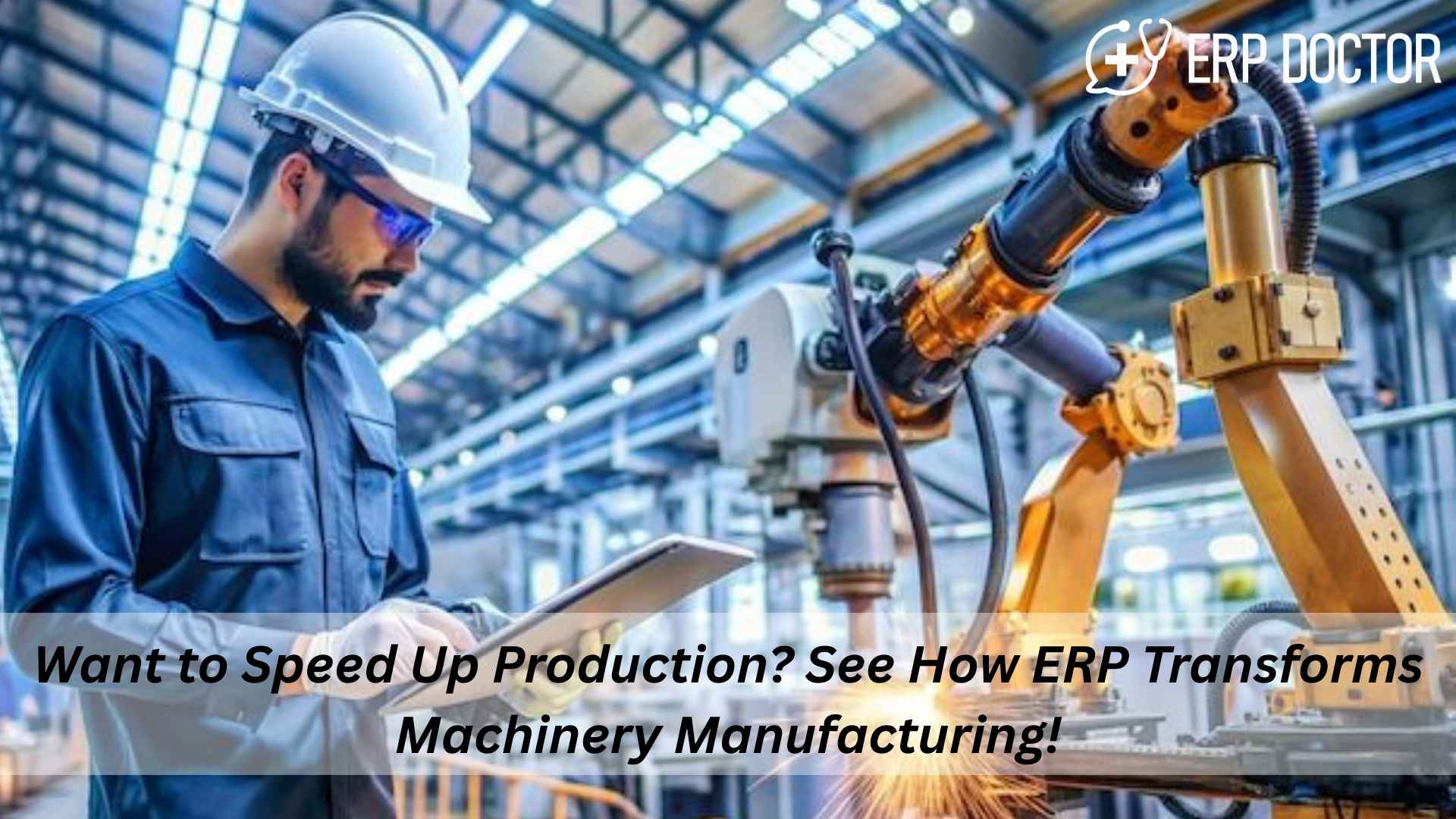
ERP for Machinery Manufacturing: How to Speed Up Production and Transform Your Workflow

Unlock Efficiency and Cut Downtime with ERP for Manufacture of Machinery Today
Machinery manufacturing has grown more complex than ever. From managing precision components to coordinating global supply chains, manufacturers face increasing pressure to deliver faster, more accurately, and at lower costs. This is where ERP for Machinery Manufacturing is transforming the game bringing automation, visibility, and real-time decision-making to an industry that depends on precision and uptime.
Modern Manufacturing ERP Software allows machine builders, industrial equipment ERP producers, and heavy machinery manufacturers to streamline production, reduce downtime, and stay competitive. By bringing together planning, scheduling, inventory, costing, and quality management, ERP (Enterprise resource planning) becomes the central brain powering the modern factory.
Why Enterprise Software Matters in Today’s Competitive Machinery Production Environment
As customer expectations rise and production cycles tighten, manufacturers can’t rely on spreadsheets or disconnected systems. The right Machinery Production ERP System unifies all workflows—sales, engineering, procurement, production, and service creating a single source of truth.
Whether you build CNC machines, industrial pumps, compressors, fabrication equipment, or heavy machinery, having the right ERP System
For Manufacturers
is crucial for:
- Shorter lead times
- Faster approvals
- Better production planning
- Error-free BOM management
- Lower scrap and rework
- Accurate cost forecasting
This is why companies are shifting toward Industrial Machinery ERP Software, ensuring data flows seamlessly across departments.
Streamlining Operations Across the Machine Manufacturing Lifecycle
An advanced ERP for Machine Builders supports everything from design to delivery. It ensures engineering teams, shop-floor operators, and procurement managers work in sync resulting in faster production cycles and higher-quality outputs.
Here’s how ERP boosts each stage:
1. Engineering & BOM Accuracy
ERP reduces engineering delays by providing automated BOM creation, version control, revision tracking, and integration with CAD tools.
2. Procurement Planning
Through real-time inventory visibility, Supply Chain ERP for Machinery eliminates unnecessary purchases, avoids material shortages, and ensures procurement aligns with production schedules.
3. Production Automation
With Machine Manufacturing Automation ERP, manufacturers can automate work orders, track machine usage, schedule maintenance, and monitor performance in real-time.
4. Quality Assurance
ERP enables consistent inspection routines, compliance audits, and documentation to maintain the highest safety and quality standards.
5. After-Sales & Service Management
ERP Industrial equipment requires continuous servicing. ERP helps track warranties, service contracts, AMC schedules, and spare parts availability.
Boosting Production Speed in High-Demand Machinery Manufacturing Settings
In fast-paced machinery manufacturing environments, unplanned downtime can be costly. Heavy Machinery ERP provides predictive maintenance tools, IoT integration, and machine performance analytics ensuring your production line never stops unexpectedly.
Key production benefits include:
- Better material flow
- Automated scheduling
- Real-time work order status
- Reduced idle time
- Enhanced workforce productivity
- Optimized machine utilization
This combination of automation and insights is what enables manufacturers to quickly scale output without compromising quality.
Improving Supply Chain Visibility for Complex Machinery Production Networks
Supply chains in machinery manufacturing EPR are often global and highly dependent on material availability. An intelligent ERP System for Manufacturers provides end-to-end visibility from suppliers to shipment.
With manufacturing ERP solutions, you can:
- Predict material demand
- Track vendor performance
- Reduce supply delays
- Automate reordering
- Improve cost control
The result? Faster production cycles and more predictable output.
Driving Sustainability and Component Reusability in Machinery Production
Sustainability is becoming essential in manufacturing. ERP helps support Machinery Component Recycling through improved tracking, lifecycle monitoring, and refurbishment processes.
Manufacturers can reduce waste, cut costs, and promote eco-friendly initiatives by reusing components effectively. ERP ensures compliance and traceability at every stage.
Why ERP Is Essential for Digital Transformation in the Machinery Manufacturing Marketplace
Digital transformation in machinery production requires more than automation it needs integrated intelligence. With Manufacturing Process Management ERP, companies gain end-to-end visibility, enabling data-driven decisions and improved operational excellence.
ERP supports:
- IoT-enabled machines
- Predictive analytics
- Workforce automation
- Inventory optimization
- On-time delivery performance
This is why industry leaders rely on Industrial Machinery ERP Software for Small to Large Businesses, ensuring scalability and flexibility.
Choosing the Right ERP for a Future-Ready Machinery Manufacturing Workflow
Selecting the right solution is crucial. Top features to look for include:
- Cloud and on-premises flexibility
- Production scheduling and capacity planning
- Advanced quality control
- Automated procurement
- Multi-level BOM management
- Serial number and batch tracking
- Cost estimation features
When choosing the best ERP software for manufacturing, ensure it supports your product complexity, volume, and customization level.
Many manufacturers are adopting machinery manufacturing ERP software and manufacturing resource planning software designed specifically for industrial equipment ERP production. Whether you’re a mid-sized manufacturer or a multinational operation, a robust ERP ensures your operations stay efficient and competitive.
FAQs About ERP for Machinery Manufacturing
1. How does enterprise software improve production planning in the machinery industry?
Management systems provide real-time scheduling, inventory tracking, and capacity planning, enabling companies in the machinery sector to streamline workflows efficiently.
2. Why is a digital solution crucial for quality management in machine manufacturing?
Business software helps firms standardize inspections, document compliance, and reduce defects, resulting in higher-quality machinery products.
3. Can a management system reduce machine downtime in manufacturing operations?
Yes, the platform enables predictive maintenance, helping manufacturers avoid breakdowns and keep equipment running smoothly.
4. How does business software assist with BOM accuracy in machinery projects?
It ensures correct BOM versions, updates revisions, and automates material allocation for engineering processes in machine production.
5. Does enterprise software help improve supply chain transparency for machinery companies?.
Absolutely. It improves supplier tracking, procurement planning, and delivery accuracy for supply chains in the machinery sector.
6. Is a management system useful for shop-floor automation in manufacturing plants?
Yes, it integrates with machines, IoT devices, and workstations to enhance shop-floor automation in production environments.
7. How does business software support cost control for machinery manufacturers?
The system tracks material usage, labor time, overheads, and production costs to help businesses stay within budget while manufacturing equipment.
8. Can a digital solution handle after-sales service for machinery equipment?
Yes, it manages warranties, service visits, and spare parts planning for service operations in machine production companies.
9. Does enterprise software improve inventory accuracy in machinery warehouses?
The system enables real-time updates, stock visibility, and automated tracking tailored for inventory needs in machinery manufacturing units.
10. Is a management system scalable for growing manufacturing enterprises?
Modern business implementing manufacturing software solutions are fully scalable, supporting both small and large manufacturers as they expand their machinery production operations.