
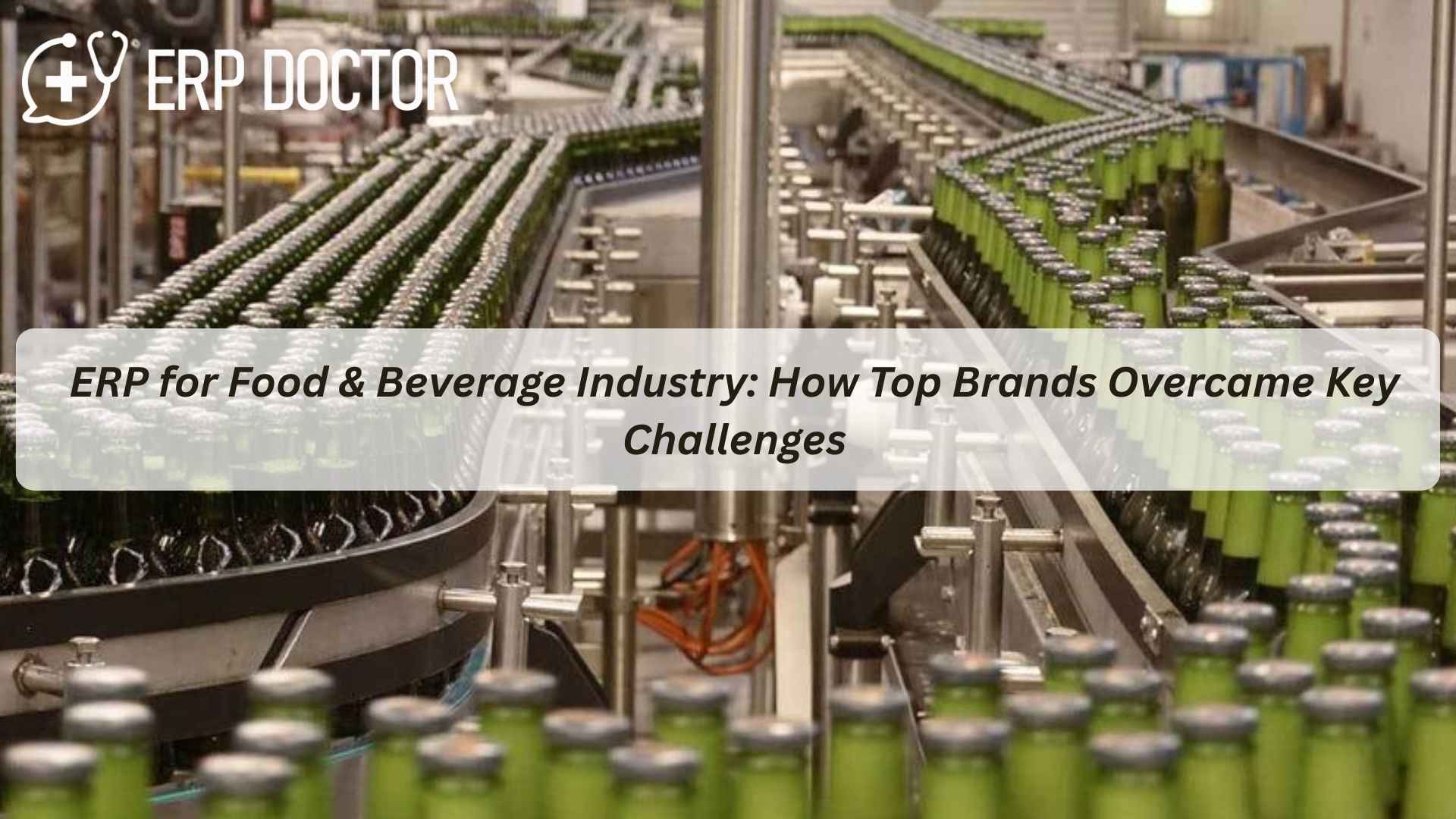
ERP for Food & Beverage Industry: How Top Brands Overcame Key Challenges
6 Key Challenges in ERP for Food & Beverage Industry and How F&B Leaders Overcame Them
The Food & Beverage Industry is one of the most fast-paced, compliance-heavy, and quality-sensitive sectors in the world. From managing fluctuating supply chains to ensuring food safety, brands face growing pressure to deliver consistent quality while maintaining profitability. This is where ERP for Food & Beverage Industry becomes the backbone of operations. Today, top Food Enterprise Resource Planning are turning to advanced Food & Beverage Manufacturing ERP Software, the Best Food Manufacturing Software, and modern ERP for Food Manufacturing solutions to solve their toughest business challenges. In this blog, we explore the six most critical pain points faced by leading brands and how ERP for Food & Beverage Industry solutions helped them transform operations.
how ERP (Enterprise Resource Planning) for Food Industry solutions helped them transform operations.
Maintaining High Product Quality in Food Production and Beverage Companies
Quality control is non-negotiable. With perishable goods, batch variations, and strict regulatory guidelines, brands must track every stage from raw materials to final packaging.
How Leaders Overcame It
Top companies implemented ERP for Food Manufacturing to manage automated batch tracking and compliance documentation. They also leveraged Food & Beverage Production Software to perform real-time quality checks and generate instant alerts.
- Real-time quality checks
- Automated batch tracking
- Compliance documentation
- Instant quality alerts
Using Food and Beverage Production Software, brands now maintain consistency at scale while preventing defects before they hit the market.
Managing Inventory and Shelf Life in Food Manufacturing Operations
Overstocking leads to waste. Understocking leads to production disruption. In the Food & Beverage landscape, both result in financial loss.
How ERP Helped
With ERP Systems for Food Manufacturers, brands gained:
- FEFO/FIFO optimization
- Expiry and shelf-life alerts
- Intelligent demand forecasting
- Accurate raw material planning
The shift from manual tracking to automated Food Processing ERP Software drastically reduced spoilage and improved inventory accuracy.
Ensuring Full Traceability Across the Supply Chain in Food Processing
Traceability plays a crucial role during recalls, audits, or contamination control.
ERP Food Industry solutions enabled businesses to:
- Record every movement from farm to fork
- Track batches, lots, and supplier performance
- Provide audit-ready documentation
- Improve supplier accountability
Brands using Food Process Manufacturing Software now ensure 100% transparency while strengthening compliance and customer trust.
Handling Complex Production and Formulation in Food & Beverage Manufacturing
F&B manufacturers deal with complex recipes, multi-stage processes, and specific nutritional guidelines.
Modern ERP for Food and Beverage Manufacturing helps streamline recipe and formula management, yield optimization, and by-product tracking. At the same time, Food & Beverage Production Software supports nutritional analysis and co-product management.
These solutions allow manufacturers to maintain accuracy, reduce production variability, and increase operational efficiency.
This allows manufacturers to maintain accuracy, reduce production variability, and increase operational efficiency.
Managing Compliance and Food Safety in the F&B Sector
From FDA and FSSAI compliance to HACCP and ISO certifications, regulations are constantly evolving.
Food and Beverage ERP Software support compliance through:
- Automated documentation
- Real-time monitoring
- Hazard analysis and critical point controls
- Digital traceability
This reduces audit pressure while ensuring brands never miss a regulatory requirement.
Achieving Real-Time Visibility and Operational Efficiency in Food Production
Fragmented systems slow down operations. Without real-time visibility, leaders struggle to make informed decisions.
ERP for Food Processing Industry empowers brands with:
- Unified dashboards
- Centralized data management
- Cross-department workflow automation
- Real-time production KPIs
Advanced Food & Beverage ERP gives CEOs and operations leaders instant access to performance metrics helping them optimize production, lower costs, and grow faster.
Why Leading Brands Choose the Best ERP System for Food & Beverage Processing
Leading enterprises consistently select the Best ERP System for Food Processing because it provides:
- Faster decision-making
- Better order fulfillment
- Improved supplier coordination
- Higher production throughput
- Stronger profitability
Companies that once struggled with manual processes are now thriving with scalable ERP Software for Food Manufacturing.
FAQs About ERP for Food & Beverage Sector
1. Why is ERP important for food and beverage companies?
ERP helps streamline production, ensure traceability, manage recipes, and maintain food safety standards for food and beverage businesses.
2. How does an ERP system improve compliance in the food processing sector?
It automates documentation, maintains audit trails, and ensures adherence to regulatory and safety guidelines for food manufacturers.
3. Which features should F&B leaders look for in an ERP solution?
Batch tracking, recipe management, inventory control, and real-time production analytics are key for food production and beverage management.
4. Can ERP software handle complex formulations in food manufacturing?
Yes, modern ERP solutions support multi-stage recipes, nutritional data, and yield management for both food and beverage products.
5. How does ERP enhance supply chain transparency for food companies?
It tracks ingredients from suppliers to production, packaging, and delivery, improving visibility across the entire supply chain.
6. Does ERP reduce waste in food and beverage operations?
Yes—ERP uses shelf-life tracking, expiry alerts, and automated planning to minimize spoilage and optimize resources.
7. How does ERP help with production scheduling for F&B manufacturers?
It provides real-time resource allocation, demand forecasting, and optimized batch planning for efficient operations.
8. Is ERP software scalable for growing food production businesses?
Modern ERP solutions can scale easily across multiple plants, SKUs, and regional or global markets.
9. Does ERP integrate with machinery and IoT devices in food manufacturing?
Yes, ERP systems integrate with equipment sensors for live production data, predictive maintenance, and automated monitoring.
10. What makes ERP implementation successful for beverage companies?
Clear process mapping, strong user training, accurate data migration, and phased deployment are key to a successful Food & beverage ERP implementation.