
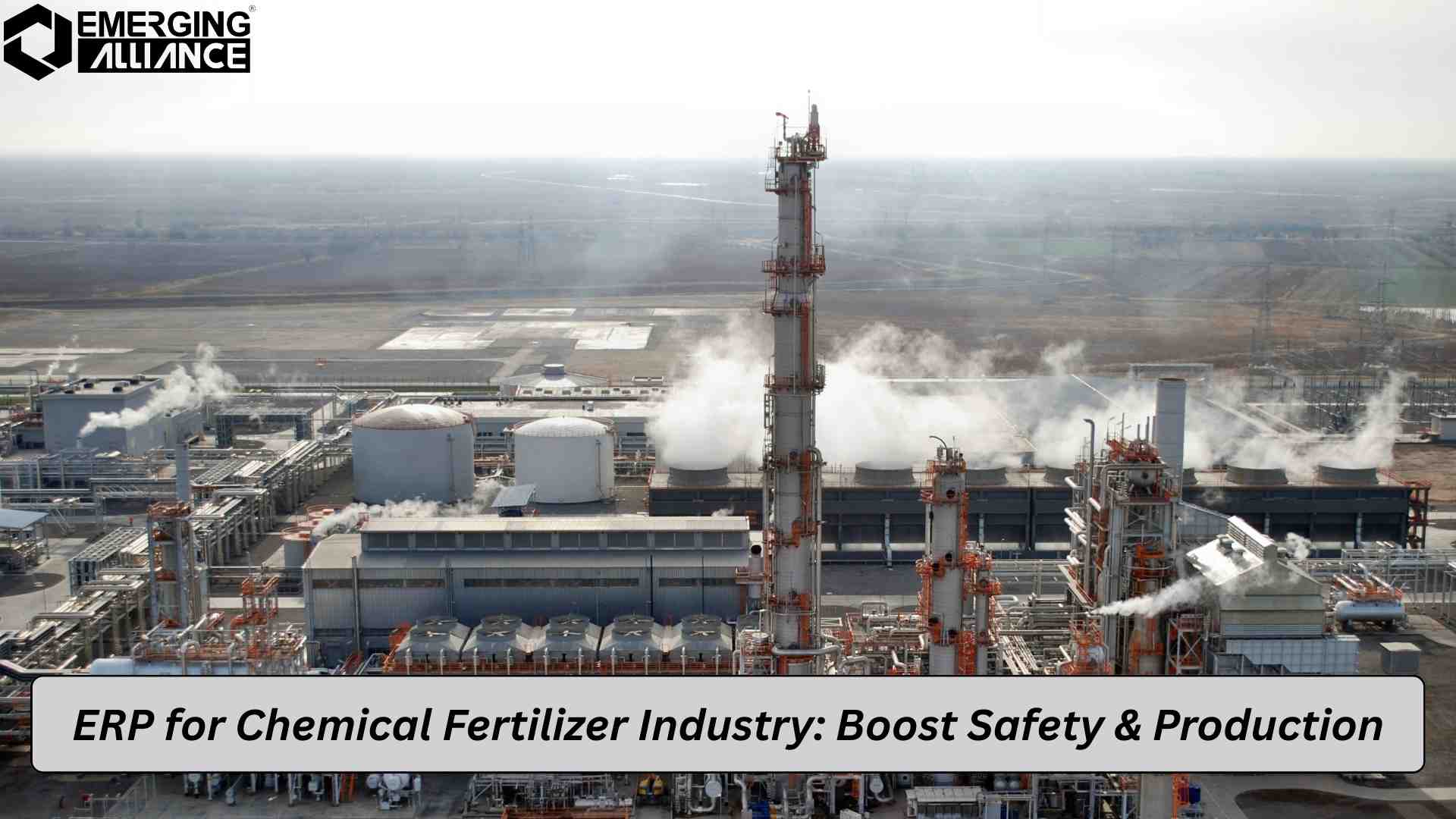
ERP for Chemical Fertilizer Industry: Boost Safety & Production
How ERP for Chemical Fertilizer Industry Enhances Safety and Production Control
In the chemical fertilizer industry, production efficiency and safety are non-negotiable. Managing complex manufacturing processes, strict compliance, and inventory control demands a robust system. This is where ERP for Chemical Fertilizer Industry comes into play. By integrating production, safety protocols, and real-time monitoring, ERP software ensures operations run smoothly while minimizing risk.
Production Planning and Workflow Optimization with ERP for Chemical Fertilizer Industry
Efficient Resource Management – ERP software allows chemical fertilizer companies to plan raw material usage accurately, reduce waste, and optimize batch production schedules.
Real-Time Workflow Tracking – Managers can monitor each production stage, ensuring timely completion and reducing downtime. ERP solutions provide dashboards to track ongoing operations, delays, and bottlenecks.
Key Takeaways:
- Automate batch scheduling and resource allocation
- Reduce material wastage and cost
- Gain visibility across all production stages
Safety Compliance and Regulatory Control Using ERP for Chemical Fertilizer Industry
Hazard Monitoring – Chemical fertilizer production involves handling hazardous materials. ERP systems track chemical storage, handling procedures, and compliance with safety regulations.
Audit-Ready Reports – ERP software generates real-time safety logs, reducing manual reporting errors and ensuring adherence to OSHA, EPA, and local guidelines.
Key Takeaways:
- Automated safety alerts and compliance tracking
- Quick audit preparation with historical data
- Minimize human error in hazardous operations
Inventory Management and Traceability with ERP for Chemical Fertilizer Industry
Accurate Stock Control – ERP platforms manage raw material and finished goods inventories with real-time updates.
Batch and Lot Tracking – Every production batch is tracked for quality assurance, recall management, and regulatory compliance.
Key Takeaways:
- Prevent stockouts or overstocking
- Trace batches from raw materials to end products
- Ensure high-quality fertilizer production
Integration with Existing Systems
Seamless ERP Integration – A robust ERP system integrates with accounting, HR, procurement, and supply chain software, enabling smooth operations.
Custom ERP Solutions – Companies can customize modules according to their production and safety requirements.
Key Takeaways:
- Connect ERP with legacy systems or cloud platforms
- Implement modules for finance, supply chain, and HR
- Tailor ERP to small, mid-sized, or large enterprises
Cost-Effective and Scalable ERP Solutions
Smart ERP Systems – Cloud ERP options allow chemical fertilizer businesses to scale operations without massive IT investments.
ROI on ERP Implementation – Reduced downtime, efficient production, and better compliance translate to measurable cost savings.
Key Takeaways:
- Flexible pricing for SMEs and large enterprises
- Scalable modules for future growth
- Minimized IT infrastructure cost with cloud solutions
Data-Driven Decision Making
Real-Time Reporting – Managers can access dashboards, KPIs, and predictive analytics to make informed decisions.
Forecasting and Planning – ERP platforms analyze past production data to forecast demand, optimize procurement, and improve profitability.
Key Takeaways:
- Make informed operational decisions
- Forecast production and sales efficiently
- Improve financial planning with integrated ERP reports
Why ERP Implementation is Essential for the Chemical Fertilizer Industry
Implementing ERP in the chemical fertilizer industry is no longer optional—it is vital for enhancing operational efficiency, ensuring safety, and maintaining regulatory compliance. Leveraging real-time ERP software and tailored ERP solutions enables businesses to achieve complete visibility into production processes, inventory management, and safety protocols, ultimately driving smarter decision-making and sustainable growth.
Partnering with ERP Doctor ensures that your chemical fertilizer business harnesses the full potential of ERP implementation. With our expertise in SAP B1 ERP and customized solutions for the chemical industry, we help streamline production, optimize inventory, enforce safety standards, and maintain regulatory compliance seamlessly. By choosing ERP Doctor, companies gain a trusted ally in transforming operations, boosting efficiency, and enabling data-driven decisions that drive sustainable growth.
Frequently Asked Questions About ERP for Chemical Fertilizer Industry
1. What is ERP for Chemical Fertilizer Industry?
ERP (Enterprise Resource Planning) software for the chemical fertilizer industry integrates production, safety, inventory, and compliance management into a single system. It helps businesses streamline complex manufacturing processes, enhance safety, and gain full visibility into operations.
2.How ERP for Chemical Fertilizer Industry Improves Production Planning?
ERP systems optimize resource management by accurately planning raw material usage, reducing waste, and scheduling batch production efficiently. Real-time workflow tracking ensures every production stage is monitored, bottlenecks are identified, and downtime is minimized.
Key Benefits:
- Automated batch scheduling and resource allocation
- Reduced material wastage and cost
- Full visibility across all production stages
3. ERP for Chemical Fertilizer Industry and Safety Compliance?
Chemical fertilizer production involves hazardous materials. ERP software tracks chemical storage, handling procedures, and compliance with safety regulations like OSHA and EPA. It also generates audit-ready reports, reducing manual errors and ensuring safety protocols are followed.
Key Benefits:
- Automated safety alerts and compliance tracking
- Quick audit preparation with historical data
- Minimized human error in hazardous operations
4. Can ERP manage inventory and traceability effectively?
Yes. ERP platforms provide accurate stock control for raw materials and finished goods. Batch and lot tracking allows companies to trace every product from production to delivery, ensuring quality and regulatory compliance.
Key Benefits:
- Prevent stockouts or overstocking
- Trace batches for quality assurance and recall management
- Maintain high-quality fertilizer production
5. Can ERP integrate with existing business systems?
A robust ERP system can seamlessly connect with accounting, HR, procurement, and supply chain software. Customizable modules allow businesses to adapt the ERP system to their specific production, safety, and operational needs.
Key Benefits:
- Integration with legacy systems or cloud platforms
- Tailored modules for finance, supply chain, and HR
- Suitable for small, mid-sized, and large enterprises
6. Is ERP cost-effective and scalable for fertilizer businesses?
Modern ERP solutions, especially cloud-based platforms, allow chemical fertilizer companies to scale operations without heavy IT investment. Reduced downtime, better compliance, and optimized production translate into measurable ROI.
Key Benefits:
- Flexible pricing for SMEs and large enterprises
- Scalable modules for future growth
- Lower IT infrastructure costs with cloud solutions
7. How does ERP support data-driven decision-making?
ERP dashboards and real-time reports provide key performance indicators (KPIs) and predictive analytics. Businesses can forecast production, plan procurement, optimize sales, and improve financial planning using integrated data.
Key Benefits:
- Make informed operational decisions
- Forecast production and sales efficiently
- Improve financial planning with comprehensive ERP reports
8. Why is ERP implementation essential in the chemical fertilizer industry?
ERP is vital for ensuring operational efficiency, safety, and regulatory compliance. Real-time monitoring, inventory control, and automated safety protocols help businesses make smarter decisions and grow sustainably.
Partnering with a specialized ERP provider like ERP Doctor ensures your fertilizer business leverages SAP B1 ERP and customized solutions to streamline production, optimize inventory, enforce safety standards, and maintain compliance.