
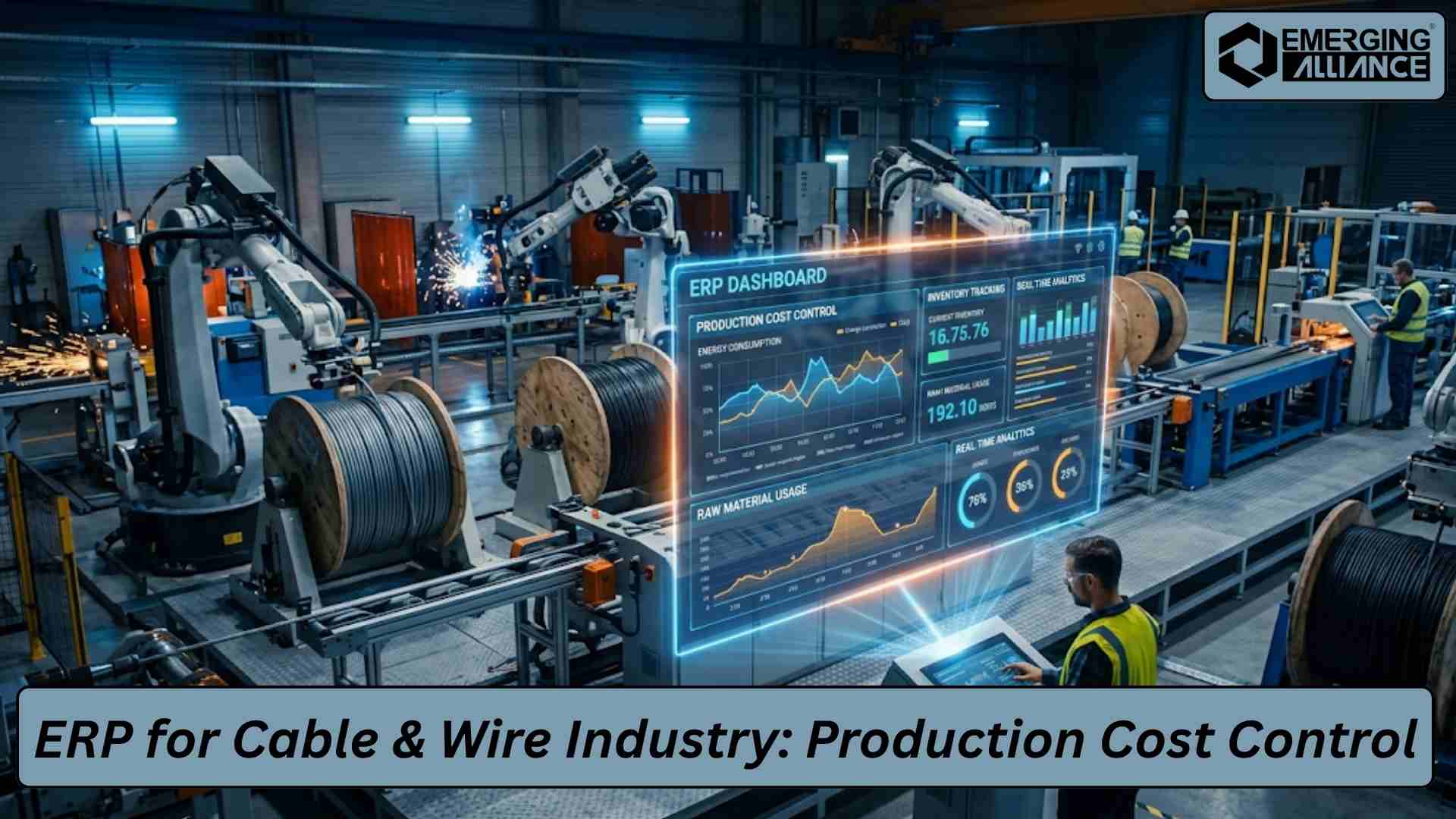
ERP for Cable & Wire Industry: Production Cost Control
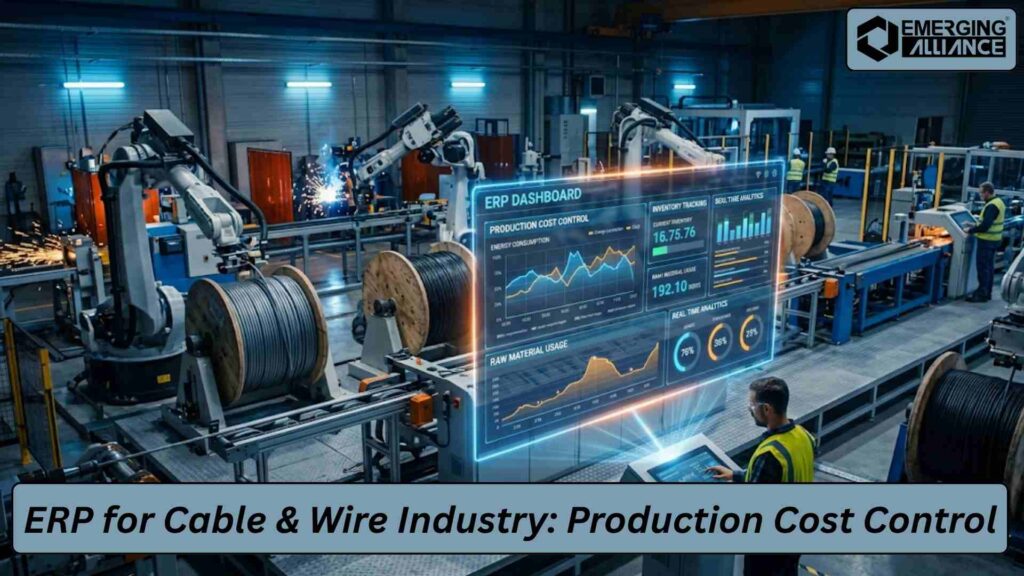
ERP for Cable & Wire Industry: Production & Cost Control using ERP
In today’s competitive manufacturing landscape, the ERP for Cable & Wire Industry plays a critical role in improving efficiency, reducing operational costs, and ensuring seamless production workflows. Cable and wire manufacturers deal with complex processes such as raw material handling, multi-stage production, and strict quality standards. Without a unified system, managing these operations becomes challenging and error-prone.
An advanced ERP system helps businesses streamline operations, gain real-time insights, and maintain cost control while improving productivity. This blog explores how an integrated ERP platform transforms cable and wire manufacturing.
Production Planning
production scheduling
Efficient production planning is essential in cable manufacturing due to varying product specifications and batch sizes. A smart ERP system enables:
- Automated production scheduling
- Demand forecasting based on historical data
- Reduced machine downtime
- Improved resource allocation
material requirement planning
ERP software ensures that raw materials like copper, aluminum, and insulation materials are available when needed, preventing delays and excess inventory.
Cost Control
cost tracking
Cost control is a major concern for manufacturers. A real-time ERP software provides accurate cost tracking at every stage:
- Raw material costs
- Labor costs
- Machine usage costs
- Overhead expenses
budget management
With an all-in-one ERP solution, businesses can set budgets and monitor deviations in real time, helping managers take corrective actions quickly.
Inventory Management
stock visibility
Inventory plays a crucial role in cable production. An ERP platform provides real-time visibility into:
- Raw materials
- Work-in-progress goods
- Finished products
inventory optimization
By using cloud ERP, businesses can reduce excess stock, avoid shortages, and maintain optimal inventory levels.
Quality Control
quality assurance
Cable manufacturing requires strict adherence to quality standards. A custom ERP solution helps track:
- Inspection processes
- Compliance requirements
- Defect rates
traceability
ERP systems ensure full traceability of products from raw materials to finished goods, which is critical for audits and customer trust.
Supply Chain Management
vendor management
An integrated ERP platform improves vendor coordination by:
- Tracking supplier performance
- Managing procurement cycles
- Ensuring timely deliveries
logistics optimization
ERP integration services streamline logistics, reducing transportation delays and costs.
Financial Management
financial reporting
An enterprise resource planning system provides accurate financial insights, including:
- Profit and loss statements
- Balance sheets
- Cash flow analysis
compliance management
ERP software ensures compliance with tax regulations and financial standards, reducing risks and penalties.
Real-Time Data Insights
data analytics
A smart ERP system offers advanced analytics dashboards that help decision-makers:
- Identify inefficiencies
- Track KPIs
- Improve productivity
real-time monitoring
With real-time ERP software, managers can monitor operations instantly and make data-driven decisions.
ERP Implementation for Cable & Wire Industry
implementation strategy
Successful ERP implementation requires:
- Clear business goals
- Process mapping
- Employee training
- Continuous monitoring
erp consulting services
Professional ERP consulting services ensure smooth deployment and customization according to business needs.
ERP Integration for Cable & Wire Industry
system integration
ERP integration connects various business functions such as:
- Production
- Finance
- Inventory
- Sales
automation benefits
With ERP integration services, businesses can automate repetitive tasks, reducing manual errors and saving time.
ERP for Small, Mid-Sized, and Large Cable Companies
scalability
An ERP for small businesses provides essential tools at a lower cost, while ERP for mid-sized companies and ERP for large enterprises offer advanced features for scalability.
flexibility
Modern cloud ERP solutions allow businesses to scale operations without major infrastructure investments.
Benefits of ERP for Cable & Wire Industry
operational efficiency
ERP systems eliminate silos and improve coordination across departments.
cost reduction
A cost-effective ERP software minimizes waste and optimizes resource usage.
better decision making
Access to real-time data helps leaders make informed decisions quickly.
customer satisfaction
Improved production and delivery timelines enhance customer experience.
Challenges Without ERP in Cable Manufacturing
manual errors
Lack of automation increases the risk of human errors.
data silos
Disconnected systems lead to poor communication and inefficiencies.
limited visibility
Without ERP, tracking production and costs becomes difficult.
Conclusion: Why ERP is Essential for the Cable & Wire Industry
Implementing an ERP system in the cable and wire industry is no longer optional but a strategic necessity for companies aiming to achieve operational excellence, improve cost efficiency, and drive sustainable growth. By leveraging a fully integrated ERP platform, businesses can streamline complex production processes, enhance inventory accuracy, reduce material waste, and gain real-time visibility across all departments, from procurement to sales. This level of control not only improves decision-making but also helps manufacturers respond quickly to market demands and customer requirements. With the right implementation partner like ERP Doctor, businesses can unlock the full potential of ERP through tailored solutions, industry-specific expertise, and dedicated support. Whether you are a small-scale manufacturer looking to scale operations or a large enterprise managing high-volume production, partnering with ERP Doctor ensures smarter planning, optimized resource utilization, and long-term competitiveness in an increasingly demanding market.
Frequently Asked Questions About ERP for Cable & Wire Industry
1. What is ERP for the Cable & Wire Industry, and why is it strategically important?
ERP for the Cable & Wire Industry is an integrated enterprise system that connects production planning, raw material management (copper, aluminum, insulation), inventory, finance, and supply chain operations. It is critical for managing complex manufacturing processes, ensuring cost control, improving traceability, and enabling real-time visibility across multi-stage production environments.
2. How does ERP enhance production planning in cable manufacturing?
ERP systems enable advanced production planning by automating scheduling, aligning demand forecasts with machine capacity, and managing multi-stage processes such as drawing, stranding, insulation, and sheathing. This ensures optimal resource utilization, reduced downtime, and improved on-time delivery performance.
3. How does ERP contribute to cost reduction in cable and wire manufacturing?
ERP tracks raw material consumption, labor costs, energy usage, and overheads in real time. It identifies inefficiencies such as material wastage, production delays, or excess inventory, enabling manufacturers to optimize processes and significantly reduce operational costs.
4. Is ERP scalable for small and mid-sized cable manufacturers?
Yes, modern ERP solutions are modular and scalable, allowing small manufacturers to start with core modules like inventory and finance, and expand into advanced functionalities such as production planning, quality control, and analytics as the business grows.
5. What are the key ERP features required for the cable and wire industry?
Essential features include batch and lot traceability, Bill of Materials (BOM) management for multi-layer cables, production planning, real-time inventory tracking, quality control, financial integration, and analytics dashboards for performance monitoring.
6. What is the typical ERP implementation timeline for cable manufacturers?
Implementation timelines typically range from 3 to 6 months for small to mid-sized manufacturers and may extend further for complex operations involving multiple plants, custom workflows, and system integrations.
7. How does ERP support quality control and compliance?
ERP systems enforce quality checks at each production stage, track defect rates, maintain inspection records, and generate compliance reports. This ensures adherence to industry standards and improves product reliability.
8. What are the advantages of cloud ERP for cable and wire companies?
Cloud ERP reduces upfront infrastructure costs, enables remote access, supports scalability, and ensures automatic updates. It is particularly beneficial for companies with multiple locations or limited IT resources.
9. Can ERP integrate with existing manufacturing and business systems?
Yes, ERP systems can integrate with CRM, accounting software, machine-level systems, and supply chain platforms. This ensures seamless data flow, eliminates silos, and improves overall operational efficiency.
10. How does ERP improve decision-making in cable manufacturing?
ERP provides real-time dashboards, production analytics, cost insights, and demand forecasts. This enables management to make data-driven decisions, optimize resource allocation, and respond quickly to market changes.