
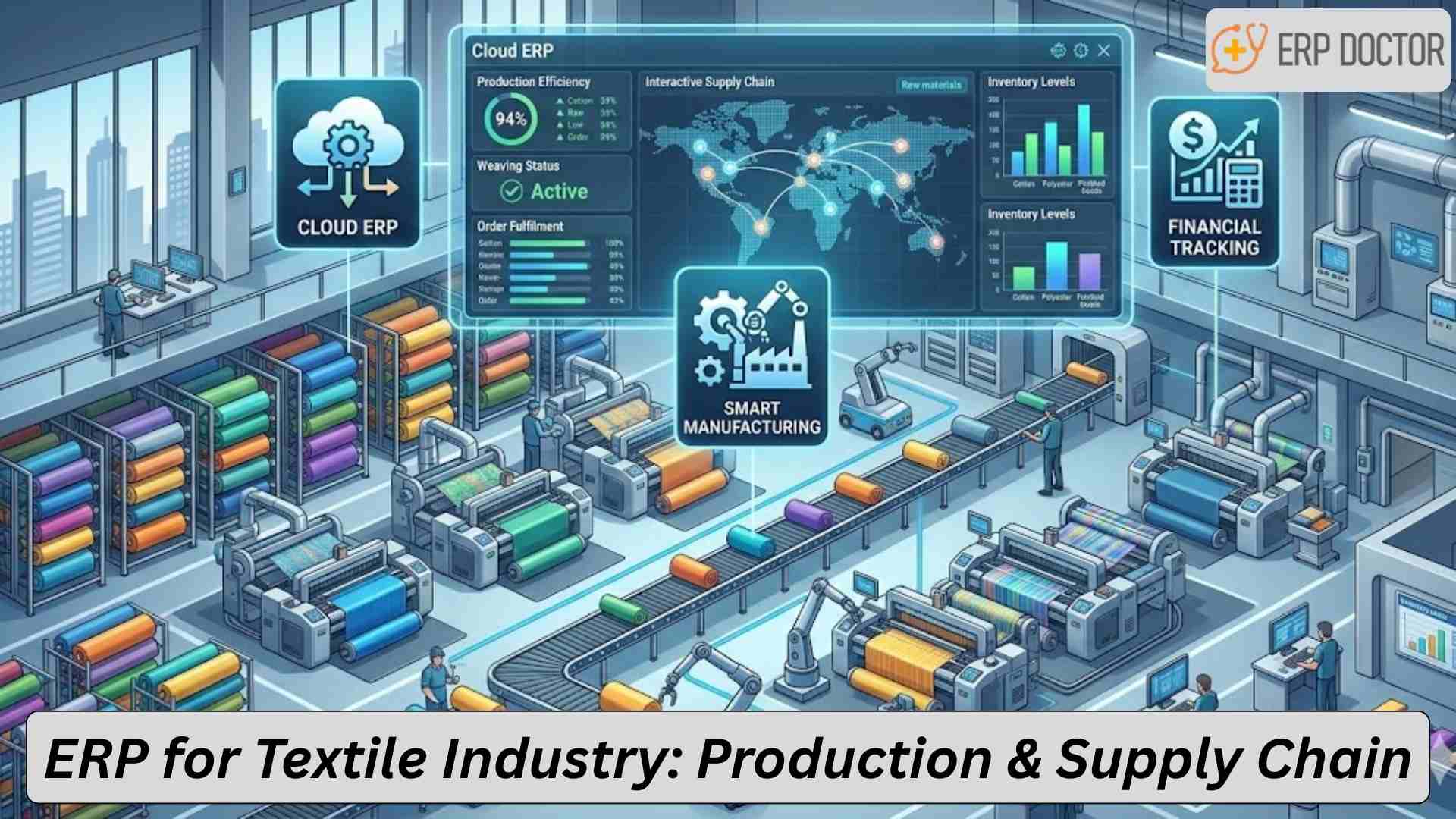
ERP for Textile Industry: Production & Supply Chain
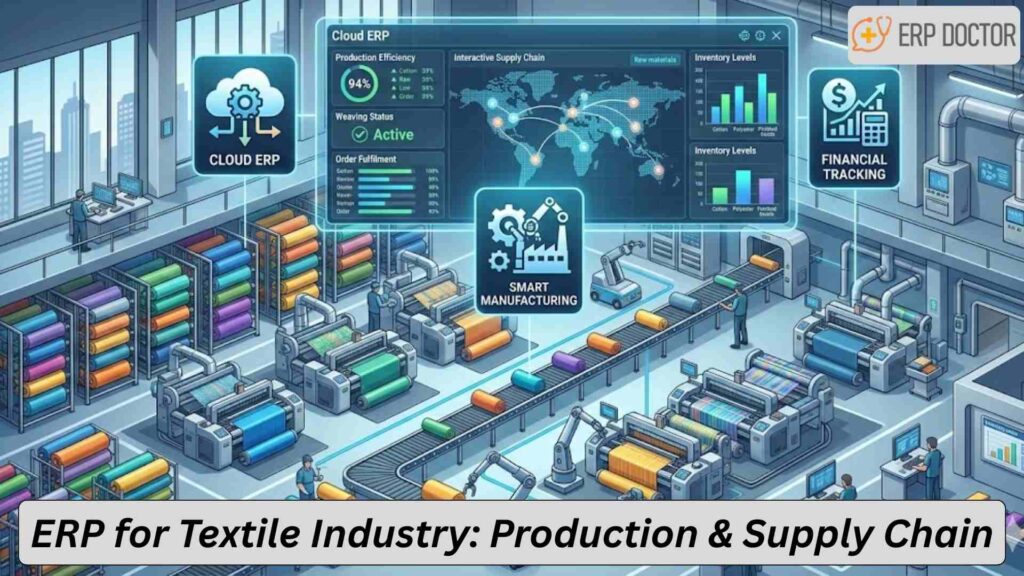
ERP for Textile Industry: Managing Production, Inventory & Supply Chain Efficiently
The textile sector is one of the most complex manufacturing industries, handling raw materials, dyeing processes, weaving, stitching, packaging, and global distribution. Without proper system control, production delays, excess inventory, and supply chain disruptions become common. This is where ERP for Textile Industry plays a crucial role.
An advanced ERP system connects every department — from procurement to finance — under a single integrated ERP platform. By adopting modern Enterprise Resource Planning tools, textile businesses can improve visibility, control costs, and enhance operational efficiency.
Production Planning & Control
Production scheduling
Textile production involves multiple stages like spinning, weaving, dyeing, and finishing. An ERP system automates production scheduling, ensuring that each process runs in sequence without delays.
Work order management
A smart ERP system generates work orders automatically based on sales demand and inventory availability. This reduces manual errors and production bottlenecks.
Capacity planning
Using real-time ERP software, managers can monitor machine capacity and workforce availability. This ensures optimal machine utilization and reduces idle time.
Quality control tracking
Quality checkpoints can be integrated into the ERP platform. Textile manufacturers can track defect rates, rework levels, and compliance requirements efficiently.
Practical takeaway: Automated production management improves delivery timelines and customer satisfaction.
Inventory Management
Raw material tracking
Cotton, yarn, dyes, chemicals, and accessories must be tracked precisely. ERP software enables barcode-based inventory tracking for real-time stock updates.
Batch management
Textile products are often produced in batches. An integrated ERP platform records batch details, ensuring traceability and quality consistency.
Warehouse optimization
ERP solutions help organize warehouse layouts, monitor stock levels, and prevent overstocking or stock-outs.
Demand forecasting
With Enterprise Resource Planning tools, businesses can analyze past sales data and predict future demand accurately.
Practical takeaway: Better inventory control reduces waste and improves profit margins.
Supply Chain Optimization
Supplier management
ERP integration services allow seamless communication with suppliers. Purchase orders, delivery schedules, and payment tracking become automated.
Logistics coordination
Cloud ERP enables real-time shipment tracking. Textile exporters can monitor delivery timelines and manage global shipments efficiently.
Order processing
A custom ERP solution links sales orders directly to production planning, reducing order fulfillment time.
Multi-location management
ERP for mid-sized companies and ERP for large enterprises supports multi-warehouse and multi-branch operations under one centralized ERP system.
Practical takeaway: A connected supply chain improves transparency and reduces operational risks.
ERP for Textile Industry & Financial Management
Cost control
An all-in-one ERP solution integrates production, procurement, and finance modules. This provides real-time cost visibility.
Budget planning
ERP for small businesses helps track expenses, allocate budgets, and monitor profitability.
GST & compliance management
Real-time ERP software ensures compliance with tax regulations and financial reporting standards.
Profitability analysis
Textile businesses can evaluate product-wise and customer-wise profitability through automated reports.
Practical takeaway: Financial clarity supports strategic decision-making.
ERP for Textile Industry & Customization Needs
ERP customization
Every textile business operates differently. ERP customization allows tailoring modules according to dyeing, spinning, or garment manufacturing needs.
ERP consulting services
Professional ERP consulting services help select the right ERP platform and design implementation strategies.
ERP implementation
A structured ERP implementation ensures minimal disruption during system migration.
ERP integration
ERP integrate capabilities allow connection with CRM, HR, and eCommerce platforms.
Practical takeaway: Customized ERP ensures better alignment with business goals.
ERP for Textile Industry: Cloud & Smart Technologies
Cloud ERP advantages
Cloud ERP offers scalability, lower infrastructure costs, and remote accessibility. It is ideal for expanding textile enterprises.
Smart ERP system features
Automation, AI-based analytics, and dashboard reporting provide actionable insights.
Real-time ERP software
Live data updates help managers respond quickly to production or supply chain issues.
Cost-effective ERP software
Modern ERP solutions reduce operational costs while improving productivity.
Practical takeaway: Digital transformation enhances competitiveness in global markets.
ERP for Textile Industry for Small, Mid-Sized & Large Enterprises
ERP for small businesses
Small textile units benefit from affordable ERP software that centralizes operations.
ERP for mid-sized companies
Growing textile manufacturers need scalable ERP integration services for expansion.
ERP for large enterprises
Large textile exporters require a robust Enterprise Resource Planning system with advanced analytics and global capabilities.
Practical takeaway: ERP adapts to business size and growth stage.
ERP for Textile Industry: Key Benefits Summary
- Improved production efficiency
- Reduced inventory waste
- Stronger supplier coordination
- Better financial control
- Enhanced customer satisfaction
- Scalable growth opportunities
By implementing ERP for Textile Industry, companies gain a competitive advantage in a rapidly evolving market.
Conclusion: Empowering Textile Manufacturers with Smart ERP Solutions
ERP for the Textile Industry revolutionizes the way manufacturers manage production, inventory, procurement, and supply chain operations. By enabling real-time data tracking, improved financial visibility, and seamless process integration, ERP software helps textile businesses reduce operational inefficiencies and respond quickly to market demands.
With cloud-based scalability and centralized data management, textile companies can streamline workflows, enhance quality control, and maintain complete transparency across departments. Investing in a customized and fully integrated ERP platform not only drives operational excellence but also ensures long-term sustainability, profitability, and competitive growth in the evolving textile market.
To maximize these benefits, partnering with an experienced implementation expert is crucial. ERP Doctor delivers customized ERP solutions tailored specifically for textile businesses, ensuring smooth deployment, industry-specific configurations, and ongoing support. With deep domain expertise and a customer-focused approach, ERP Doctor helps textile manufacturers unlock operational excellence, improve profitability, and build a future-ready enterprise.
Frequently Asked Questions About ERP for the Textile Industry
1.What is ERP for Textile Industry and why is it important?
ERP for Textile Industry is a centralized Enterprise Resource Planning system that manages production, inventory, finance, and supply chain operations in textile businesses. It improves operational efficiency, enhances visibility, and reduces manual errors across departments.
2.How does ERP software improve textile production management?
ERP software enhances textile production by:
- Automating production scheduling and planning.
- Tracking work orders in real time.
- Monitoring machine capacity and utilization.
- Reducing delays and improving workflow coordination.
3.Is Cloud ERP suitable for small textile businesses?
Yes. Cloud ERP is cost-effective, scalable, and requires minimal IT infrastructure, making it ideal for small textile manufacturers looking to expand operations efficiently.
4.How long does ERP implementation take in the textile industry?
ERP implementation typically takes 3–9 months depending on business size, operational complexity, customization needs, and data migration requirements.
5.Can ERP integrate with existing accounting software?
Yes. ERP integration services allow seamless connectivity with accounting software, CRM systems, payroll tools, and other third-party applications to ensure unified data flow.
6.What are the main challenges before implementing ERP?
Common challenges include:
- Employee resistance to new technology.
- Data migration and cleansing issues.
- Need for business process restructuring.
- Training and change management requirements.
7.How much does ERP for Textile Industry cost?
Costs vary based on selected modules, level of customization, deployment model (cloud or on-premise), and company size. Cloud ERP solutions generally have lower upfront investment compared to traditional systems.
8.Will ERP reduce textile inventory losses?
Yes. ERP systems provide real-time inventory tracking, demand forecasting, and automated stock alerts, helping reduce overstocking, stockouts, and material wastage.
9.Is ERP suitable for garment exporters?
Absolutely. ERP solutions efficiently manage export documentation, shipment tracking, compliance requirements, and multi-location operations for garment exporters.
10.What is the ROI of ERP in textile manufacturing?
Most textile businesses experience improved productivity, reduced operational costs, enhanced decision-making, and better customer satisfaction within 1–2 years of ERP implementation.