
ERP for Telecommunications Industry Billing & Network
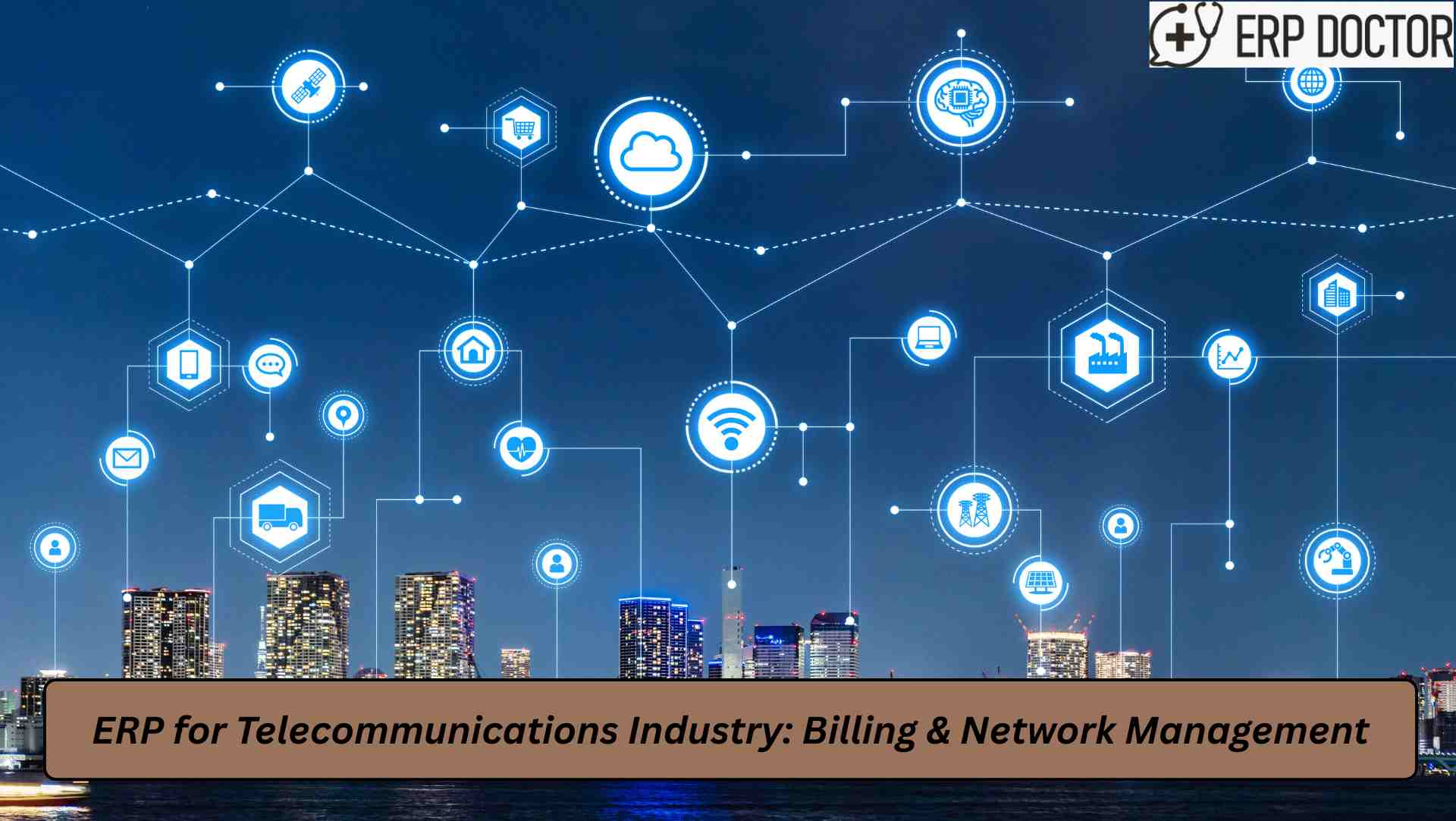
ERP for Telecommunications Industry: Billing & Network Management Using ERP
The telecommunications sector operates in one of the most complex and fast-moving business environments. From real-time billing cycles to network performance monitoring and regulatory compliance, telecom companies manage vast volumes of data daily. Implementing ERP for Telecommunications Industry is no longer optional—it is essential for ensuring accuracy, scalability, and operational control. A powerful ERP system integrates billing, customer management, financials, and network operations into a unified platform that drives efficiency and growth.
Unified Billing Management
Automated Billing Cycles
Telecom providers handle prepaid, postpaid, subscription-based, and usage-based billing models. Manual processes increase the risk of revenue leakage and billing disputes. An integrated ERP platform automates billing cycles, ensuring invoices are generated accurately and on time.
Real-Time Usage Tracking
With real-time ERP software, telecom companies can track call data records (CDR), internet usage, roaming charges, and value-added services instantly. This ensures transparency and reduces customer complaints.
Revenue Assurance
Enterprise Resource Planning systems identify discrepancies between network usage and billing data. This prevents revenue loss and strengthens financial control.
Multi-Tariff Management
Telecom companies frequently update plans and promotional offers. A smart ERP system allows seamless management of tariff structures without disrupting existing operations.
Practical takeaway: Automating telecom billing with ERP software reduces manual errors, improves cash flow, and enhances customer satisfaction.
Network Management Integration
Centralized Network Monitoring
Telecom networks consist of towers, fiber infrastructure, switches, routers, and data centers. ERP integration connects network performance data with operational modules, providing a centralized monitoring dashboard.
Preventive Maintenance Scheduling
Using ERP solutions, telecom providers can schedule preventive maintenance for network equipment. This reduces downtime and service interruptions.
Asset Lifecycle Management
An ERP platform tracks telecom assets from procurement to installation and retirement. This ensures optimal utilization and accurate depreciation accounting.
Incident Management & Reporting
With integrated ERP software, service tickets can be linked directly to network issues. This improves response time and accountability.
Practical takeaway: Integrating network operations with an ERP system improves service reliability and reduces operational risk.
Financial & Compliance Control
Automated Financial Reporting
Telecom companies manage high transaction volumes daily. ERP implementation ensures financial statements, tax reports, and regulatory filings are generated accurately.
Regulatory Compliance
Telecom is a heavily regulated sector. ERP consulting services help companies customize compliance modules according to local telecom regulations.
Budget & Cost Control
Cost tracking across network operations, marketing campaigns, and customer acquisition becomes streamlined with cost-effective ERP software.
Audit-Ready Documentation
An all-in-one ERP solution stores every transaction and network log in one system, making audits simpler and faster.
Practical takeaway: Financial transparency increases investor confidence and regulatory trust.
ERP for Telecommunications Industry – Customer Relationship Management
360-Degree Customer View
ERP software integrates CRM with billing and service management. Customer profiles include payment history, usage trends, and service tickets.
Faster Complaint Resolution
ERP integration services link customer care with technical teams, ensuring faster resolution of connectivity issues.
Personalized Service Plans
Using analytics within a custom ERP solution, telecom companies can design personalized offers based on customer usage behavior.
Retention & Loyalty Management
Real-time insights allow telecom providers to proactively address churn risks.
Practical takeaway: A connected ERP system enhances customer experience and improves retention rates.
ERP for Telecommunications Industry – Scalability with Cloud ERP
Cloud-Based Flexibility
Cloud ERP allows telecom companies to scale operations without heavy infrastructure investment.
Remote Access & Mobility
Network engineers and managers can access dashboards from anywhere using secure cloud ERP solutions.
Data Security & Backup
An integrated ERP platform hosted in the cloud ensures automated backups and strong cybersecurity protocols.
Support for Growing Enterprises
ERP for mid-sized companies and ERP for large enterprises offers flexible modules to adapt as telecom businesses expand.
Practical takeaway: Cloud ERP ensures scalability and resilience in competitive telecom markets.
ERP for Telecommunications Industry – ERP Integration & Customization
Seamless Third-Party Integration
Telecom systems require integration with OSS/BSS platforms, payment gateways, and CRM tools. ERP integration services ensure smooth connectivity.
Custom Workflow Automation
ERP customization enables telecom providers to align workflows with unique operational requirements.
Data Synchronization Across Departments
Enterprise Resource Planning ensures finance, operations, customer service, and technical teams work from a single source of truth.
Future-Ready ERP Platform
A smart ERP system adapts to emerging technologies like 5G, IoT, and AI-driven analytics.
Practical takeaway: Custom ERP solutions future-proof telecom operations.
ERP for Telecommunications Industry – Benefits for Small & Large Providers
ERP for Small Businesses
Small telecom providers gain structured processes and visibility through cost-effective ERP software.
ERP for Mid-Sized Companies
Growing telecom firms benefit from improved financial control and integrated network management.
ERP for Large Enterprises
Large telecom operators require advanced ERP integration, multi-location support, and global compliance modules.
Practical takeaway: ERP solutions support telecom organizations at every growth stage.
Why ERP is Essential for the Telecommunications Industry
ERP for the Telecommunications Industry empowers telecom providers with automated billing, real-time network monitoring, streamlined financial control, and advanced customer relationship management. In a fast-paced and highly competitive telecom landscape, managing complex operations without a centralized system can lead to inefficiencies and revenue leakage.
By leveraging cloud ERP solutions, seamless ERP integration services, and customized ERP platforms, telecom businesses gain complete operational visibility and scalability. From subscription management and usage-based billing to compliance reporting and multi-location operations, ERP ensures accuracy, efficiency, and data-driven decision-making.
Investing in a robust ERP system is not just a technology upgrade—it is a strategic foundation for sustainable growth, improved customer satisfaction, and long-term profitability in the evolving telecommunications industry.
At ERP Doctor, we specialize in empowering the telecommunications industry with cutting-edge ERP solutions. Our tailored platforms streamline billing, optimize network operations, and provide real-time financial and customer insights, ensuring telecom companies operate efficiently and stay ahead in a competitive market. With seamless ERP integration, cloud-based scalability, and compliance-ready systems, ERP Doctor transforms complex telecom operations into a unified, intelligent workflow—helping your business boost revenue, enhance customer satisfaction, and drive sustainable growth.
Frequently Asked Questions: ERP for Telecommunications Industry
1. What is ERP for the Telecommunications Industry?
ERP for Telecommunications Industry is an integrated software solution that unifies billing, network operations, finance, and customer management. It helps telecom companies automate processes, improve accuracy, and gain complete operational visibility.
2. How does ERP improve billing management for telecom companies?
ERP automates billing cycles for prepaid, postpaid, subscription-based, and usage-based models. It ensures:
- Accurate invoice generation
- Real-time usage tracking
- Revenue assurance by detecting discrepancies
- Seamless multi-tariff management
Benefit: Reduces manual errors, enhances cash flow, and improves customer satisfaction.
3. Can ERP help with telecom network management?
Yes. ERP integrates network operations to provide:
- Centralized monitoring of towers, switches, and data centers
- Preventive maintenance scheduling to reduce downtime
- Asset lifecycle tracking from procurement to retirement
- Incident management linked to service tickets
Benefit: Enhances network reliability and reduces operational risk.
4. How does ERP support financial control and compliance?
ERP provides:
- Automated financial reporting and tax compliance
- Budgeting and cost tracking across operations
- Audit-ready documentation for regulatory requirements
Benefit: Improves financial transparency, investor confidence, and regulatory trust.
5. How does ERP enhance customer relationship management in telecom?
ERP integrates CRM with billing and service management to offer:
- 360-degree customer profiles
- Faster complaint resolution
- Personalized service plans based on usage trends
- Retention and loyalty management
Benefit: Boosts customer satisfaction and reduces churn.
6. What are the advantages of cloud ERP for telecom companies?
Cloud ERP provides:
- Scalability without heavy infrastructure investment
- Remote access and mobility for managers and engineers
- Automated data backup and robust cybersecurity
- Flexibility to support growth from small to large enterprises
Benefit: Ensures resilience and adaptability in a competitive market.
7. Can ERP be customized for telecom operations?
Yes. ERP integration and customization include:
- Seamless third-party system integration (OSS/BSS, CRM, payment gateways)
- Custom workflow automation to match unique operational needs
- Data synchronization across departments
- Future-ready adaptability for 5G, IoT, and AI analytics
Benefit: Future-proofs telecom operations and improves cross-department efficiency.
8. Is ERP suitable for small, mid-sized, and large telecom companies?
- Small Providers: Gain structured processes and visibility through cost-effective ERP solutions.
- Mid-Sized Companies: Benefit from integrated network management and financial control.
- Large Enterprises: Require advanced multi-location support, global compliance, and complex ERP integration.
Benefit: ERP scales with business growth and operational complexity.
9. Why is ERP essential for the telecommunications industry?
ERP empowers telecom companies with:
- Automated billing and revenue assurance
- Real-time network monitoring
- Streamlined financial management and compliance
- Advanced customer relationship management
Outcome: Ensures operational efficiency, data-driven decision-making, and sustainable growth.
10. How can ERP Doctor help telecom companies?
ERP Doctor specializes in telecom ERP solutions:
- Tailored platforms for billing and network optimization
- Cloud-based scalability and secure integration
- Real-time financial and customer insights
- Compliance-ready and future-proof ERP systems
Outcome: Transforms complex telecom operations into a unified, intelligent workflow—boosting revenue and customer satisfaction.