
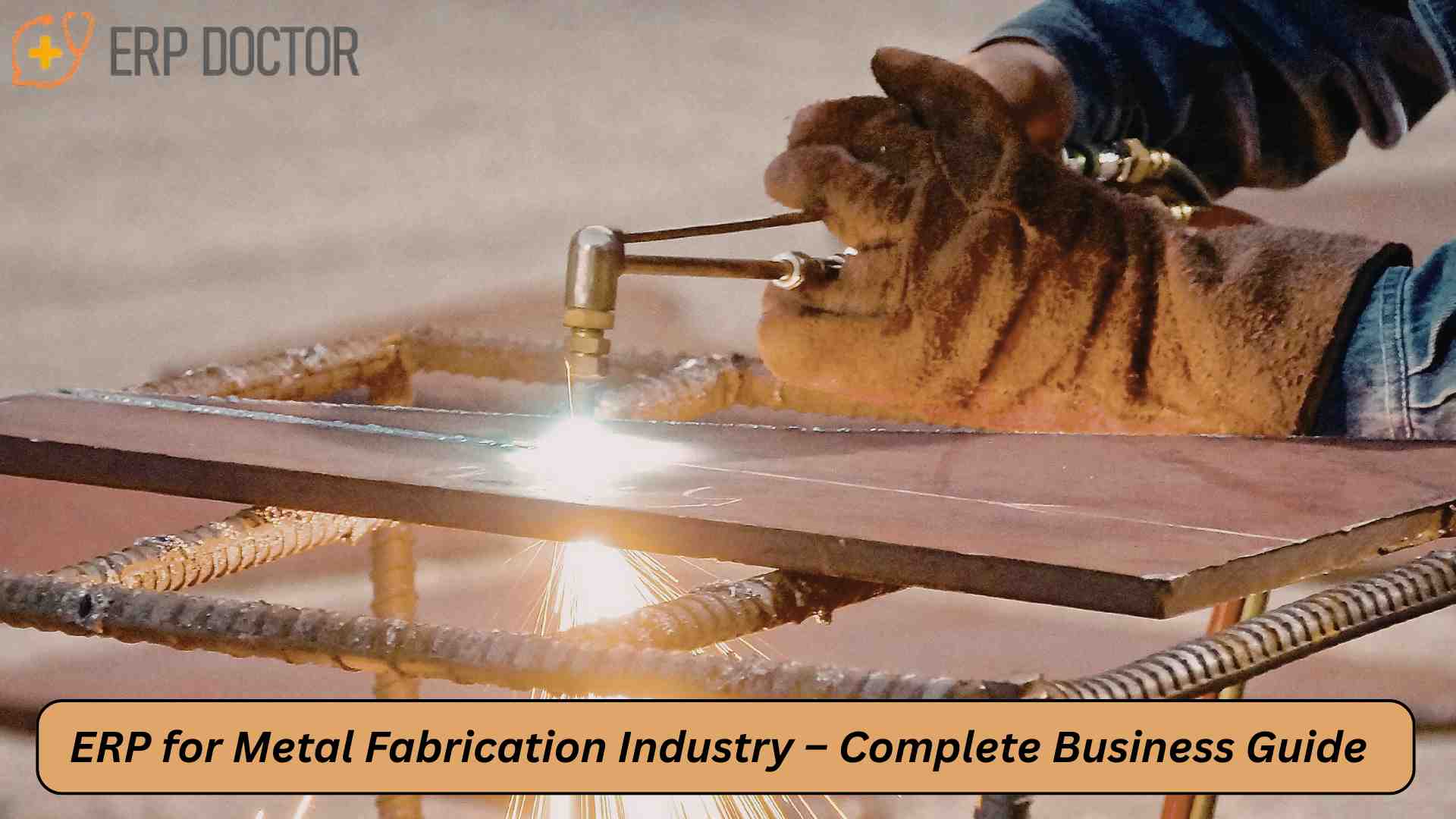
ERP for Metal Fabrication Industry – Complete Business Guide
ERP for Metal Fabrication Industry and Manufacturing Success
The metal fabrication industry is evolving rapidly, driven by increasing demand for precision, faster turnaround times, and cost efficiency. From small workshops to large fabrication-focused companies, managing raw materials, production schedules, labor, and compliance has become more complex than ever. This is where ERP for Metal Fabrication Industry plays a crucial role—helping metal fabricators centralize operations, improve visibility, and make data-driven decisions in a highly competitive market.
Modern Manufacturing Landscape
Metal fabrication operations involve cutting, bending, welding, machining, and assembling metal components across multiple projects. Traditional systems and spreadsheets struggle to handle this complexity.
ERP software integrates all core business functions into one unified platform, enabling metal fabrication firms to manage production, inventory, finance, sales, and HR efficiently. For the metal fabrication sector, ERP is no longer optional—it is a strategic necessity.
Operational Challenges
Metal fabrication businesses face unique challenges that generic software cannot address effectively. These include fluctuating raw material costs, custom job orders, complex bills of materials, and tight delivery timelines.
ERP solutions designed for fabrication manufacturing help overcome these challenges by offering real-time insights into shop floor activities, inventory movement, and project profitability.
Production Planning
Fabrication manufacturing requires precise coordination between machines, labor, and materials. ERP software enables production planning based on actual capacity and demand.
Key advantages include:
- Accurate job costing and scheduling
- Reduced production bottlenecks
- Improved on-time delivery
- Better utilization of machines and workforce
For metal fabricators handling multiple custom orders, ERP ensures every job is tracked from quotation to final delivery.
Inventory and Material Control
Metal fabrication firms depend heavily on raw materials such as steel, aluminum, and alloys. Poor inventory management leads to excess stock, wastage, or production delays.
ERP integrates inventory with procurement and production, allowing fabrication-focused companies to:
- Track raw material usage in real time
- Automate reordering based on demand
- Reduce scrap and material wastage
- Maintain optimal stock levels
This level of control is critical in the metal fabrication sector where material costs significantly impact profitability.
Financial Visibility
ERP solutions provide complete financial transparency across fabrication operations. From tracking project-wise profitability to managing cash flow, ERP helps decision-makers stay in control.
Benefits include:
- Real-time cost tracking
- Automated invoicing and billing
- Accurate profit and loss analysis
- Compliance-ready financial reporting
ERP for fabrication manufacturing ensures financial data aligns seamlessly with operational performance.
Quality Management
Metal fabrication businesses must adhere to strict quality standards and customer specifications. ERP software supports quality control by embedding checks at every stage of production.
With ERP integration, metal fabricators can:
- Track quality inspections
- Record non-conformance issues
- Ensure traceability of materials and processes
- Meet industry and regulatory standards
This reduces rework, improves customer satisfaction, and strengthens brand reputation.
ERP for Metal Fabrication Industry and Workforce Management
Metal fabrication operations rely on skilled labor and efficient workforce planning. ERP enables better scheduling, attendance tracking, and performance monitoring.
Fabrication companies benefit from:
- Optimized labor allocation
- Reduced overtime costs
- Enhanced productivity tracking
- Streamlined HR and payroll processes
ERP implementation ensures the workforce aligns with production goals.
ERP for Metal Fabrication Industry and Business Scalability
As metal fabrication businesses grow, managing multiple plants, projects, and customers becomes increasingly complex. ERP solutions are scalable and adaptable to evolving business needs.
ERP supports growth by:
- Standardizing processes across locations
- Enabling data-driven expansion decisions
- Supporting multi-company and multi-currency operations
- Enhancing customer relationship management
This makes ERP essential for metal fabrication firms planning long-term growth.
ERP for Metal Fabrication Industry and Technology Integration
ERP integrate seamlessly with CAD, CAM, IoT machines, and third-party applications commonly used in metal fabrication. This ensures a connected digital ecosystem.
Integration benefits include:
- Faster design-to-production cycles
- Improved machine utilization
- Real-time production monitoring
- Reduced manual data entry
ERP for metal fabrication and steel manufacturing creates a truly smart factory environment.
ERP for Metal Fabrication Industry and ERP Implementation Strategy
Successful ERP implementation requires careful planning and industry-specific customization. Fabrication-focused companies must choose ERP solutions that understand their operational workflows.
Key implementation best practices:
- Define clear business objectives
- Choose industry-ready ERP solutions
- Train employees effectively
- Plan phased rollouts
- Monitor performance continuously
A well-executed ERP implementation delivers measurable ROI and operational excellence.
ERP for Metal Fabrication Industry When Choosing the Right Solution
Choosing the right ERP software to scale fabrication operations is critical. Not all ERP systems are built for the unique needs of metal fabricators.
Look for ERP solutions that offer:
- Job-based manufacturing support
- Advanced inventory and material tracking
- Strong reporting and analytics
- Customization for fabrication workflows
- Reliable vendor support
This ensures long-term success and operational efficiency.
Conclusion: ERP for Metal Fabrication Industry
ERP for Metal Fabrication Industry empowers manufacturers to streamline operations, control production costs, enhance quality standards, and achieve sustainable growth. By integrating core functions such as production planning, inventory control, procurement, finance, and workforce management into a unified platform, metal fabrication companies gain real-time visibility and operational efficiency.
With features like job costing, material traceability, shop-floor control, and compliance reporting, ERP software helps metal fabricators reduce waste, improve delivery timelines, and make data-driven decisions. Whether for small fabrication workshops or large-scale metal manufacturing enterprises, implementing the right ERP solution enables scalability, competitiveness, and long-term profitability in an increasingly demanding market.
ERP Doctor is a trusted technology partner delivering tailored ERP solutions for the metal fabrication industry. By integrating production planning, inventory management, job costing, finance, HR, and quality control into a single, unified platform, ERP Doctor helps metal fabrication companies achieve complete operational visibility and control. With industry-specific customization, smooth implementation, and ongoing expert support, ERP Doctor enables businesses—from small fabrication units to large manufacturing enterprises—to reduce costs, improve efficiency, and scale sustainably in a competitive market.
FAQs About ERP for Metal Fabrication Industry
1.What is ERP for the Metal Fabrication Industry?
ERP for Metal Fabrication Industry is an integrated software solution designed to manage end-to-end fabrication operations, including production planning, job costing, inventory control, procurement, finance, workforce management, and quality assurance—all from a single platform.
2.Why do metal fabrication companies need ERP software?
Metal fabricators deal with complex workflows, fluctuating raw material costs, custom job orders, and tight delivery schedules. ERP software helps streamline operations, reduce material wastage, control costs, improve on-time delivery, and provide real-time visibility across shop floor and management levels.
3.Is ERP suitable for small and mid-sized metal fabrication businesses?
Yes. Modern ERP solutions are scalable and modular, making them ideal for small, mid-sized, and growing metal fabrication companies. Businesses can start with core modules and expand as operations grow.
4.How does ERP improve fabrication manufacturing efficiency?
ERP automates production scheduling, tracks job-wise costs, manages inventory levels, and integrates financial data with shop-floor operations. This reduces manual errors, improves productivity, and ensures better resource utilization.
5.Can ERP integrate with existing fabrication tools and machines?
Yes. Industry-specific ERP systems can integrate with CAD/CAM software, CNC machines, and other fabrication tools to create a connected digital manufacturing environment and improve production accuracy.
6.What are the key benefits of ERP for metal fabrication operations?
Key benefits include:
- Improved production efficiency
- Accurate job costing and profitability analysis
- Reduced material waste and inventory costs
- Enhanced quality control and traceability
- Real-time reporting and decision-making
- Better scalability and business control
7.How long does ERP implementation take for metal fabrication firms?
ERP implementation typically takes between 3 to 9 months, depending on company size, customization requirements, number of modules, and data migration complexity.
8.Does ERP support quality standards and compliance requirements?
Yes. ERP systems support quality management, material traceability, audit trails, and compliance reporting to meet industry standards and customer requirements.
9.What features should metal fabrication businesses look for in an ERP solution?
Businesses should look for:
- Job-based and project manufacturing support
- Advanced inventory and raw material management
- Production planning and shop-floor control
- Customization flexibility
- Integration capabilities
- Strong implementation and post-go-live support
10.How is ERP for metal fabrication different from generic ERP software?
ERP for metal fabrication is industry-specific and designed to handle job-based production, complex BOMs, scrap management, and fabrication workflows—capabilities that generic ERP systems often lack.