
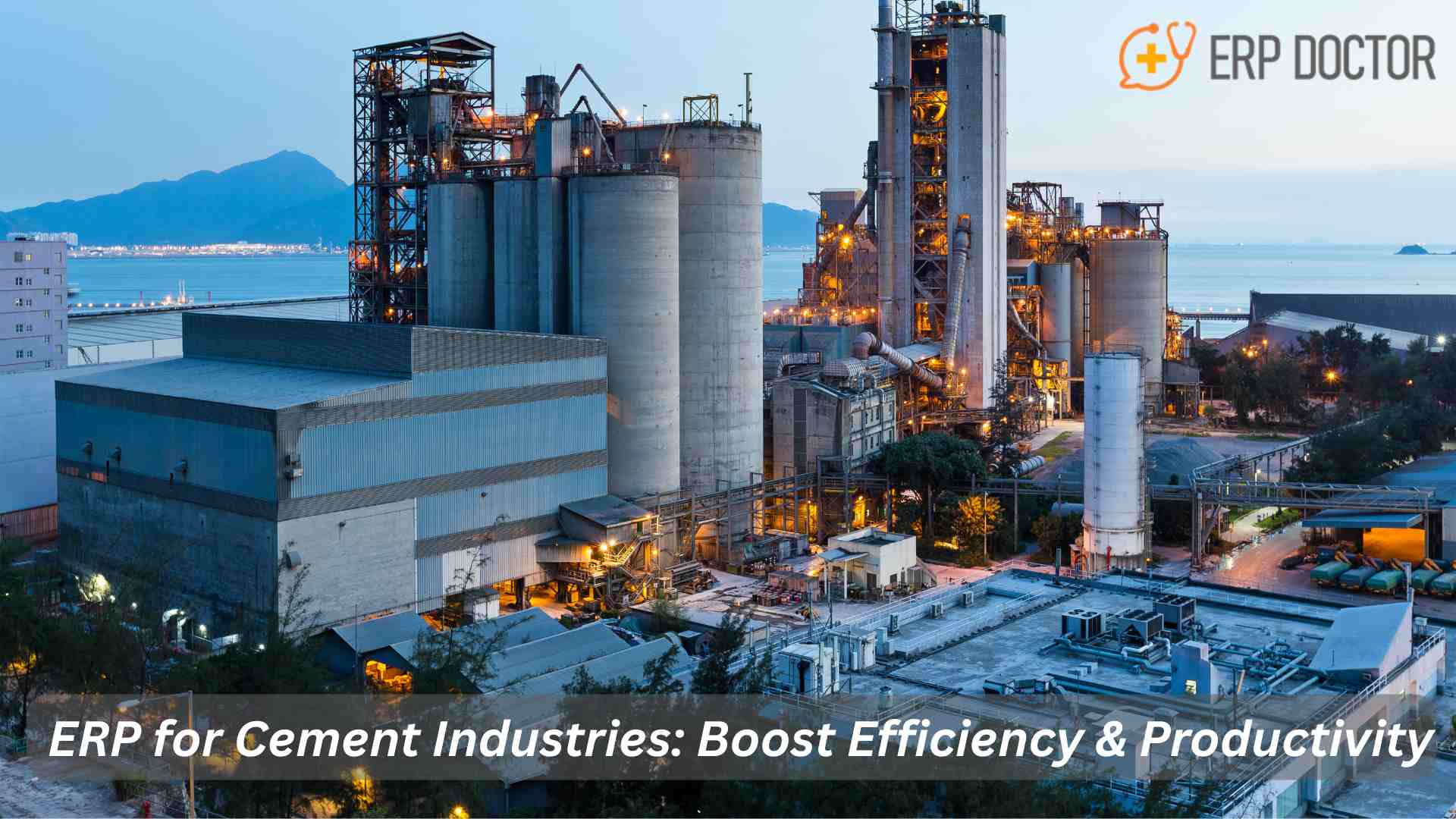
ERP for Cement Industries: Boost Efficiency & Productivity

ERP Software for the Cement Industry: Improving Production Planning and Cost Control
ERP for Cement Industries is transforming the way cement manufacturers manage production, inventory, and overall operations. In a highly competitive and cost-sensitive sector, delays, rising energy costs, and inventory inefficiencies can significantly affect profitability. By implementing robust ERP systems, cement companies can centralize processes, gain real-time cost visibility, plan more effectively, control expenses, and scale operations efficiently—eliminating operational chaos.
Benefits of ERP for Cement Industries
Centralized business management
ERP systems integrate core cement operations such as production, finance, procurement, inventory, and maintenance into a single platform. This unified approach allows cement manufacturers to replace disconnected tools with real-time operational control. Implementing ERP for Cement Industries allows companies to streamline procurement, optimize resources, and reduce operational costs.
Industry-specific configuration
Unlike generic ERP platforms, Cement ERP solutions are designed to handle batch processing, raw material ratios, kiln operations, and energy-intensive workflows unique to cement production.
Overcoming Production Challenges in Cement Plants
Operational complexity
Cement manufacturing involves multiple plants, heavy machinery, fluctuating demand, and strict quality standards. Managing these manually increases risk and inefficiency.The key benefits of ERP for Cement Industries include real-time data tracking, automated reporting, and improved production efficiency
Cost pressure and compliance
Rising fuel costs, environmental regulations, and logistics expenses require accurate cost control and reporting—something traditional systems fail to deliver.
How Technology Enhances Operational Efficiency
Production planning inefficiencies
Poor forecasting leads to overproduction or stock shortages.
Inventory imbalance
Raw materials like limestone, gypsum, and clinker require precise tracking to avoid wastage.
Maintenance downtime
Unplanned equipment failures halt cement production and increase repair costs.
Lack of real-time visibility
Disconnected data prevents leadership from making fast, informed decisions.
Streamlining Inventory and Supply Chain
Demand forecasting accuracy
Cement ERP systems use historical data and sales trends to align production schedules with market demand.
Optimized batch scheduling
ERP enables efficient kiln scheduling, resource allocation, and production sequencing.
Reduced operational delays
Automated workflows eliminate manual approvals and data duplication across departments.
Cost Control Benefits of Cement ERP Systems
Raw material cost tracking
ERP Software for the Cement Industry provides real-time insights into material consumption and wastage.
Energy usage monitoring
Energy is a major cost driver in cement production. ERP solutions track power and fuel consumption to identify optimization opportunities.
Accurate product costing
Cement ERP systems calculate per-unit production costs, improving pricing strategies and margin control.
Key ERP Modules for Cement Industry
Production management
Handles batching, kiln operations, output tracking, and production efficiency analysis.
Inventory and warehouse management
Tracks raw materials, clinker stock, finished cement, and spare parts in real time.
Maintenance management
Schedules preventive maintenance and records equipment history to reduce downtime.
Finance and accounting
Manages cost centers, budgeting, taxation, and regulatory compliance.
Sales and distribution
Controls order processing, dispatch planning, invoicing, and dealer management.
How the Cement Industry Gains from ERP Solutions
Improved decision-making
Centralized dashboards provide actionable insights across plants and departments.
Operational efficiency
Automated processes reduce errors, delays, and administrative overhead.
Scalable growth
ERP systems support plant expansion, multi-location management, and increased production volumes.
Implementing ERP in Cement Production Successfully
Process evaluation
ERP analysis and consulting services help identify gaps and define system requirements.
Choosing the right ERP consultants
Experienced ERP consultants ensure proper configuration, data migration, and training.
Phased implementation
Gradual rollout minimizes disruption to ongoing cement production operations.
Cement ERP Integration Across Operations
Plant-to-head office connectivity
Cement ERP integrates production plants with corporate offices for seamless reporting.
Supply chain coordination
Procurement, logistics, and vendors operate on shared data for better coordination.
Compliance and reporting
Automated compliance reporting ensures adherence to industry regulations.
Essential Cement ERP Features to Look For
Real-time production monitoring
Cost and margin analysis
Multi-plant management
Quality control tracking
Energy consumption analytics
These features ensure the Cement ERP system delivers measurable business value.
ERP Analysis and Consulting Services for Cement Companies
Business process mapping
Aligns ERP capabilities with operational goals.
Customization and configuration
Tailors Cement ERP solutions to plant-specific workflows.
Training and support
Ensures long-term ERP adoption and performance improvement.
Why ERP Software Is Essential for the Cement Industry
ERP software for the cement industry is no longer just a technology upgrade—it has become a strategic necessity for modern manufacturers. From production planning and inventory management to cost control and real-time operational visibility, ERP systems enable cement companies to improve efficiency and remain competitive in a demanding market. By choosing the right cement ERP system and an experienced implementation partner, organizations can drive sustainable growth and achieve operational excellence.Adopting the right ERP for Cement Industries ensures sustainable growth and a competitive edge in today’s market.
ERP Doctor is your trusted partner in transforming business operations with cutting-edge ERP solutions. We specialize in implementing ERP systems that streamline processes, reduce costs, and boost efficiency. Our expert consultants ensure seamless integration across departments, from production to finance and distribution.
With ERP Doctor, companies gain real-time insights for smarter decision-making and sustainable growth. We provide tailored support, training, and continuous improvement to maximize ERP ROI. Choose ERP Doctor to unlock your organization’s full potential and stay ahead in today’s competitive market.
Frequently Asked Questions About Cement Industry Solutions
1. What is Cement ERP and how does it benefit the cement industry?
Cement ERP systems are specialized ERP solutions designed for the cement sector. They streamline cement production, manage inventory, control costs, and improve operational efficiency, helping companies achieve sustainable growth.
2. How does implementing ERP in cement production improve efficiency?
By implementing ERP in cement production, companies can automate workflows, track raw materials, optimize kiln operations, and reduce downtime, ensuring effective cement manufacturing and timely deliveries.
3. What are the key ERP modules for the cement industry?
Key ERP modules for cement industry include production management, inventory and warehouse control, maintenance management, finance and accounting, and sales & distribution—all tailored for the cement sector.
4. Can a Cement ERP system integrate with existing operations?
Yes, Cement ERP systems can integrate with existing machinery, plant automation systems, and corporate software to provide centralized control, real-time reporting, and seamless data flow across the cement sector.
5. How do ERP systems support cement growth with robust technology?
ERP systems enable cement growth with robust ERP technology by providing real-time insights, improving cost control, enhancing production planning, and supporting scalable operations across multiple plants.
6. What top challenges in the cement industry can ERP solutions address?
Top challenges facing cement industry include inventory mismanagement, high energy costs, maintenance delays, and lack of real-time visibility—all of which Cement ERP solutions effectively resolve.
7. How does a Cement ERP system support cost control and decision-making?
Cement ERP systems track raw material consumption, energy usage, and operational costs, providing dashboards and reports that empower management to make data-driven decisions and improve profitability.
8. Why is ERP analysis and consulting important for the cement sector?
ERP analysis and consulting services help cement companies identify operational gaps, configure ERP systems for plant-specific workflows, and ensure smooth implementation, maximizing ROI.
9. Can Cement ERP support multi-plant operations?
Yes, Cement ERP supports multi-plant operations by centralizing data, synchronizing production schedules, and providing unified reporting for corporate management across all facilities.
10. What makes an ERP system essential for the cement industry?
An essential Cement ERP system ensures efficient production planning, cost control, inventory management, quality tracking, and compliance—all critical for competitive success in the cement sector.