

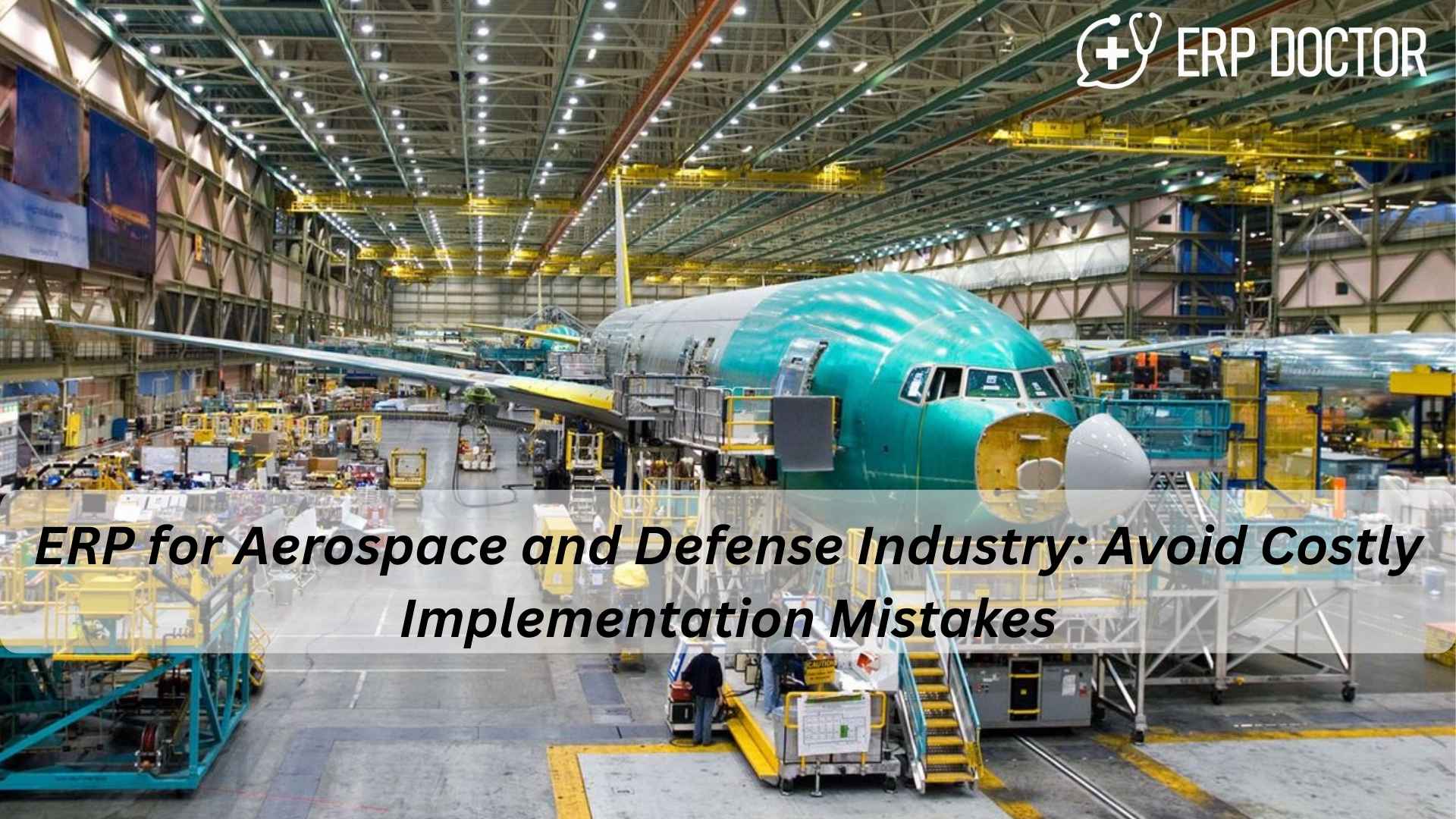
ERP for Aerospace and Defense Industry: Avoid Costly Implementation Mistakes
Ensure a smooth, risk-free rollout with ERP for Aerospace and Defense Industry in your operations
The aerospace and defense industry operates in a highly complex environment where precision, compliance, and efficiency are critical. Managing intricate supply chains, stringent regulatory requirements, and high-value manufacturing processes demands a robust ERP for Aerospace and Defense Industry. However, many organizations struggle with ERP implementations, often facing delays, budget overruns, and system underutilization. By understanding common pitfalls and leveraging industry-specific solutions like Aerospace Manufacturing ERP and Aerospace Supply Chain Management Software, companies can ensure a smooth, risk-free rollout.
Common ERP Challenges in the Aerospace and Defense Industry
Implementing ERP in the Aerospace and Defense Industry is not the same as deploying generic software. The challenges are unique and often tied to the sector’s complexity.
- Complex Regulatory Compliance
Aerospace and defense companies must comply with stringent regulations, including ITAR, FAA, and AS9100 standards. A generic ERP system may fail to manage these compliance requirements, leading to costly audits and penalties. Aerospace ERP Software Solutions offer integrated compliance modules that streamline adherence to industry standards. - Highly Specialized Supply Chains
The Aerospace Supply Chain ERP is critical to track thousands of components across multiple tiers of suppliers. A poorly implemented ERP system can cause mismanagement of inventory, delays in production, and unnecessary expenses. - Integration with Legacy Systems
Many aerospace and defense organizations rely on legacy systems for manufacturing and MRO operations. Attempting to integrate these with new ERP software without a clear strategy can result in data loss and operational disruptions. Aviation MRO ERP solutions are specifically designed to bridge this gap, ensuring seamless integration and continuity of operations. - Customization vs. Standardization
Organizations often face a dilemma: customizing the ERP to fit existing processes or adapting processes to a standardized ERP. Over-customization can complicate upgrades, while lack of flexibility can reduce usability. Solutions like Aerospace Digital Transformation ERP strike a balance, offering configurable workflows tailored to the industry’s needs.
How to Avoid Costly ERP Implementation Mistakes in the Aerospace and Defense Industry
Avoiding mistakes starts with a clear strategy and choosing the right tools. Here’s how companies can implement ERP for Aerospace and Defense Industry efficiently:
1. Conduct a Comprehensive Needs Assessment
Before selecting an Erp system for aerospace industry, identify the exact requirements across manufacturing, supply chain, compliance, and maintenance operations. Evaluate Aerospace Lifecycle Management ERP capabilities to ensure they meet both current and future operational demands.
2. Choose Industry-Specific ERP Solutions
Selecting a generic ERP can lead to inadequate features for the Aerospace and Defense Industry. Opt for Aerospace and Defense ERP Software, ERP for Aerospace and Defense, or A&D ERP solutions that address sector-specific processes like parts traceability, MRO, and project-based defense manufacturing.
3. Prioritize Cloud and Digital Transformation
Cloud adoption enhances flexibility, scalability, and collaboration. Aerospace and Defense Cloud ERP or Cloud ERP for Aerospace ensures real-time data visibility across global operations, enabling better decision-making and faster response to market changes.
4. Implement Strong Project Management
ERP implementation should follow a structured project management approach. Utilize IFS ERP solutions for aerospace and defense or ifs erp modules to manage timelines, budgets, and deliverables effectively. Avoid rushing deployment to reduce the risk of costly errors.
5. Focus on Data Quality and Traceability
Data integrity is crucial. Implement Aerospace Parts Traceability Software to ensure that all parts and components are tracked accurately, which is critical for both compliance and operational efficiency.
6. Train Employees Thoroughly
User adoption is often the most underestimated aspect of ERP success. Comprehensive training on ERP system for the A&D industry ensures that employees can leverage the software efficiently, minimizing operational disruption.
7. Plan for Continuous Improvement
ERP implementation is not a one-time event. Establish KPIs and monitor system performance regularly. ERP for Aerospace and Defence solutions allow for continuous updates and improvements, keeping the system aligned with evolving business needs.
Key ERP Modules for the Aerospace and Defense Industry
A robust Aerospace Manufacturing ERP should cover several key modules:
- Supply Chain Management: Optimizes inventory, procurement, and logistics through Aerospace Supply Chain Management Software.
- Manufacturing Operations: Streamlines production planning, shop floor control, and quality management with aerospace manufacturing software.
- Maintenance, Repair, and Overhaul (MRO): Specialized Aviation MRO ERP modules ensure asset lifecycle optimization.
- Project-Based Defense Manufacturing: Manages complex defense projects through Project-based ERP for defense.
- Cloud and Digital Transformation: Enhances collaboration and analytics using Aerospace Digital Transformation ERP and Cloud ERP Software for Aerospace & Defense Manufacturers.
- Compliance and Traceability: Guarantees regulatory adherence and product traceability with Aerospace Parts Traceability Software.
Benefits of a Successful ERP Implementation in the Aerospace and Defense Industry
Implementing ERP properly in the Aerospace and Defense Industry can bring substantial benefits:
- Improved operational efficiency and reduced costs
- Enhanced visibility across global supply chains
- Better compliance with regulatory requirements
- Real-time analytics for faster, informed decision-making
- Streamlined project management for defense manufacturing projects
- Optimized maintenance and asset management for aviation MRO operations
By leveraging Aerospace and Defense ERP, companies can achieve a competitive advantage while mitigating the risks associated with ERP rollout.
FAQs: ERP for Aerospace & Defense Industry
1. How does ERP improve supply chain visibility in the Aerospace and Defense sector?
Enterprise Resource Planning systems in aerospace and defense integrate suppliers, inventory, and production data, enhancing supply chain efficiency and minimizing delays.
2. What makes Aerospace Manufacturing ERP different from standard ERP systems?
Aerospace-focused ERP solutions are designed specifically for the aerospace and defense sector, supporting regulatory compliance, complex assemblies, and high-precision manufacturing processes.
3. Can ERP support MRO operations in aviation?
Yes, Aviation MRO ERP modules are tailored for maintenance, repair, and overhaul activities, streamlining operations in aerospace and defense organizations.
4. How does ERP improve parts traceability in Aerospace & Defense?
Parts traceability software within aerospace ERP ensures every component is tracked throughout its lifecycle, which is crucial for safety and compliance requirements.
5. Why is cloud ERP important for Aerospace and Defense companies?
Cloud-based ERP enhances collaboration, scalability, and real-time visibility across global aerospace operations, helping organizations respond faster to market demands.
6. How does ERP facilitate regulatory compliance in Aerospace & Defense?
ERP solutions for aerospace integrate standards such as ITAR and AS9100, automating documentation, reporting, and audit processes.
7. What role does project-based ERP play in defense manufacturing?
Project-centric Aerospace ERP systems manage complex defense projects, tracking budgets, schedules, and resources efficiently for aerospace and defense manufacturers.
8. Can Aerospace ERP software improve manufacturing efficiency?
Absolutely. Aerospace ERP solutions streamline production workflows, reduce waste, and optimize the utilization of resources across manufacturing operations.
9. How important is training for ERP implementation in Aerospace & Defense?
Proper training ensures users maximize ERP capabilities, minimize errors, and achieve a higher ROI for aerospace and defense enterprises.
10. What is the role of digital transformation ERP in Aerospace and Defense?
Digital ERP solutions for aerospace enable real-time analytics, cloud integration, and process automation, driving innovation and operational efficiency.