
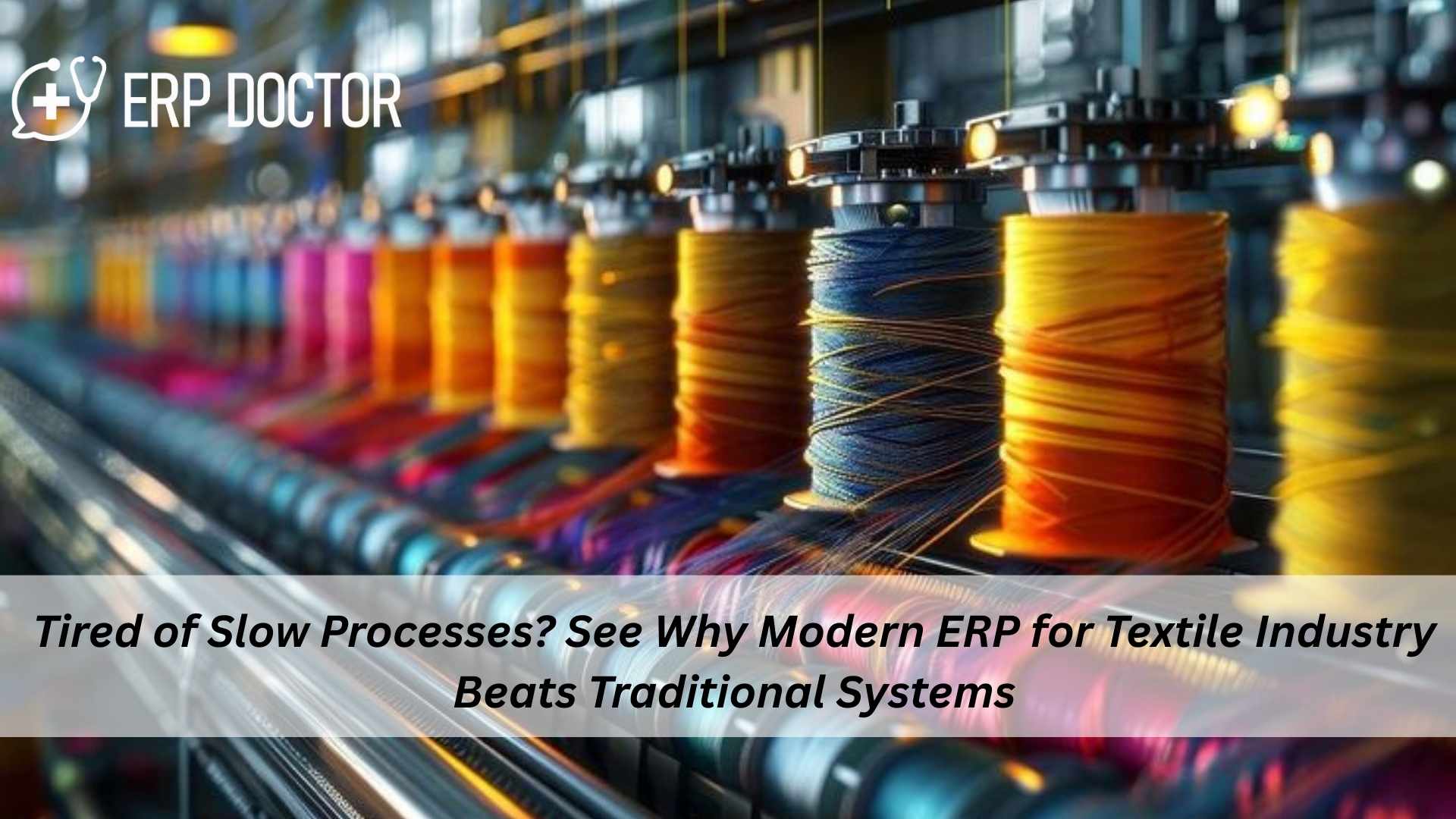
Tired of Slow Processes? See Why Modern ERP for Textile Industry Beats Traditional Systems
Find out how ERP for Textile Industry boosts efficiency and leaves old systems behind
The Textile Industry has always been fast-paced, competitive, and heavily dependent on accuracy, speed, and cost control. But as markets demand quicker delivery and greater transparency, traditional standalone systems fail to keep up. Manual processes, scattered data, and outdated software cause delays, errors, and inefficiencies that today’s textile businesses simply cannot afford. This is where an ERP (Enterprise Resource Planning) for Textile Industry becomes a complete game changer. This is where a Modern ERP for Textile Industry becomes a complete game changer. Modern ERP solutions bring automation, intelligence, and end-to-end visibility empowering textile manufacturers, garment units, fabric mills, and textile product exporters to operate with speed and accuracy. Whether you deal with spinning, weaving, dyeing, printing, knitting, garment production, or fabric finishing, the right Textile ERP Solutions can eliminate operational chaos and bring complete digital transformation.
Below, let’s look at why adopting an advanced Textile Industry ERP Software is no longer optional and how it clearly outperforms traditional systems.
Why Modern ERP for Textile Industry Outperforms Traditional Systems
Traditional tools like spreadsheets, isolated software, and manually updated logs might have worked years ago. But the growing complexity of the Textile Industry requires smarter, connected processes. Modern ERP for Textile Manufacturing integrates every department—production, inventory, procurement, sales, finance, quality, and dispatch into one unified platform.
Unlike traditional systems, which create data silos, an ERP System for Textile Companies gives you real-time visibility, automated workflows, and faster decision-making. This is especially critical for industries dealing with raw materials, fabric variants, dye batches, order customization, production stages, wastage control, and on-time delivery.
How Production ERP Improves Efficiency in the Textile Industry
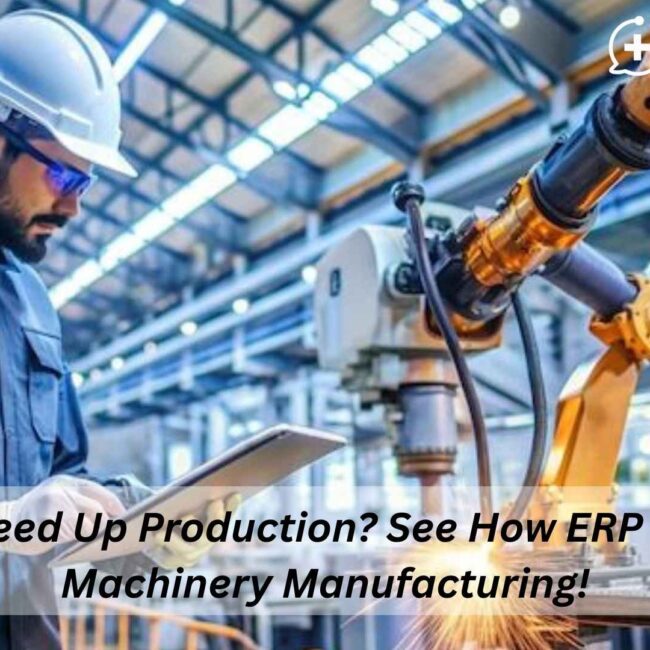
A major advantage of a Textile Production ERP is streamlined process management. From costing to production planning to quality checks, every step becomes faster and more accurate.
Key improvements include:
- Automated production scheduling
- Real-time machine load monitoring
- Dyeing/printing batch tracking
- Faster fabric and garment order processing
- Reduced wastage and rework
- Accurate cost estimation
This is something traditional systems simply cannot handle with precision.
Modern Textile Industry Automation ERP Replaces Manual Workflows
Automation is the biggest reason textile businesses adopt Textile Industry Automation ERP solutions. Automation eliminates repetitive tasks, reduces human error, and ensures that critical operations run smoothly without delays.
Some automated capabilities include:
- Auto-generated purchase orders based on stock levels
- Automated quality inspection checklists
- Automatic production updates from shop floor
- Auto costing and consumption calculations
- Automated material requirement planning
This empowers businesses to switch from reactive to proactive operations.
Textile Industry: Why ERP for Garment Industry and Fabric Manufacturing Is Essential
Whether you are in apparel production or fabric processing, modern ERP helps manage complexities like:
- Fabric rolls, lots, shades, and color variations
- Size sets, patterns, and garment styles
- Dyeing recipes and batch processes
- Washing and finishing stages
A powerful ERP for Garment Industry or ERP for Fabric Manufacturing ensures each order is processed accurately and delivered on time. Textile units achieve complete visibility from raw material purchase to dispatch, something that traditional methods fail to offer.
Textile Business Management ERP Helps Grow Faster in a Competitive Industry
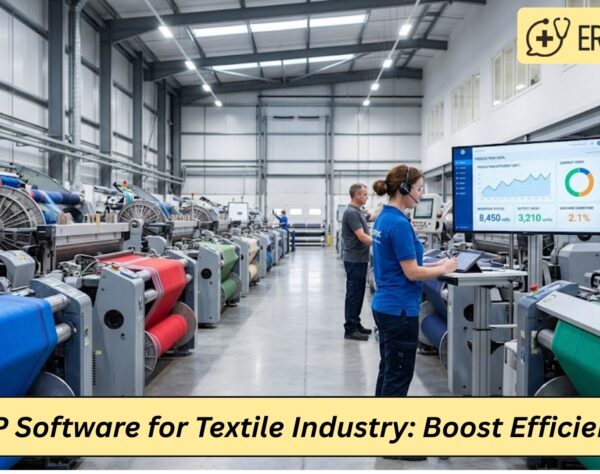
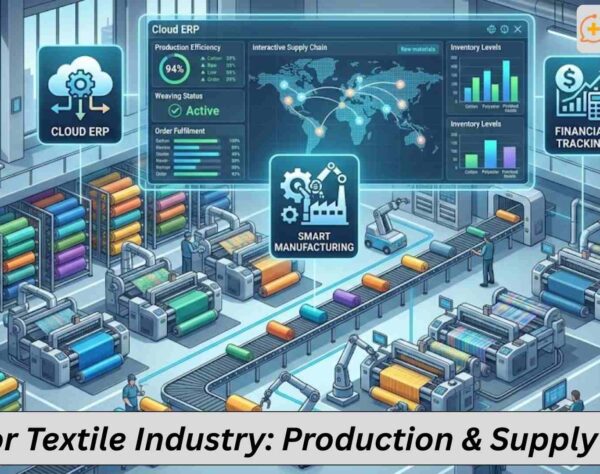
Today’s textile companies need real-time dashboards, integrated analytics, and data-driven decision-making to stay ahead. A Textile Business Management ERP brings financial data, sales performance, production metrics, and inventory levels into one unified view.
This leads to:
- Better demand forecasting
- Reduced production delays
- Higher profitability
- Improved supply chain efficiency
Traditional systems make it hard to track performance or scale operations.
The Power of ERP Software for Textile Manufacturing Industry
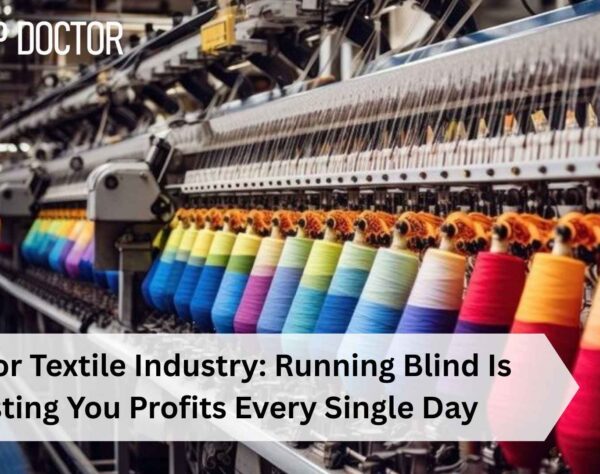
A specialized ERP Software for Textile Manufacturing Industry does more than regular ERP. It handles yarn management, loom efficiency, dyeing recipes, process sequencing, job work, wastage tracking, and customer-specific order execution.
This ensures smoother operations as you grow and expands your production capacity without losing control or accuracy.
Implementation of ERP Software in the Textile Industry
The successful implementation of ERP software is crucial for long-term benefits. Modern vendors provide:
- Process mapping
- Customization
- Data migration
- Employee training
- Ongoing ERP Services
With the right approach, businesses experience rapid ROI, minimal downtime, and smoother transformation. Traditional systems cannot achieve this level of scalability or flexibility.
Future-Proof Your Textile Industry with ERP and Industry Trends
ERP is evolving alongside manufacturing technologies. AI, IoT, predictive analytics, and smart automation are shaping tomorrow’s textile operations. Companies adopting ERP and industry trends today will be better prepared for global competition, sustainability goals, and digital transformation.
FAQs About ERP for Textile Industry
1. Why do textile manufacturers need a modern ERP system?
ERP for textile manufacturing replaces manual processes, increases efficiency, reduces errors, and provides real-time visibility across production, inventory, and quality.
2. How does ERP improve production planning in textiles?
Textile production ERP streamlines planning through automated scheduling, machine load analysis, and real-time shop-floor data.
3. Can ERP help reduce material wastage in textile manufacturing?
Yes, ERP software for textile manufacturers tracks raw materials, monitors consumption, and identifies inefficiencies to minimize waste.
4. What makes Textile ERP solutions essential for fabric and garment producers?
Textile ERP solutions provide end-to-end visibility from yarn to finished products, something traditional systems cannot match.
5. Is ERP useful for small and medium textile businesses?
Absolutely. SMEs leverage ERP for textiles to streamline operations, manage costs, and scale efficiently.
6. How does ERP enhance quality control in textile production?
Modern textile manufacturing ERP software enables automated QC checklists, dye batch tracking, and defect analysis across all production stages.
7. Can ERP handle garment and apparel processes in the Textile Industry?
Yes, specialized ERP systems for textile companies support processes like size ratios, cutting, stitching, and finishing.
8. Does ERP support multi-stage textile production?
A comprehensive textile ERP solution manages spinning, weaving, dyeing, printing, and finishing workflows efficiently
9. What ROI can textile businesses expect from ERP implementation?
Companies using ERP software for textile industry experience higher productivity, reduced costs, and faster delivery after implementation.
10. How to choose the best ERP software for textile manufacturing?
Look for scalability, automation features, production tracking, and industry-specific modules when selecting the best ERP software in textiles.